


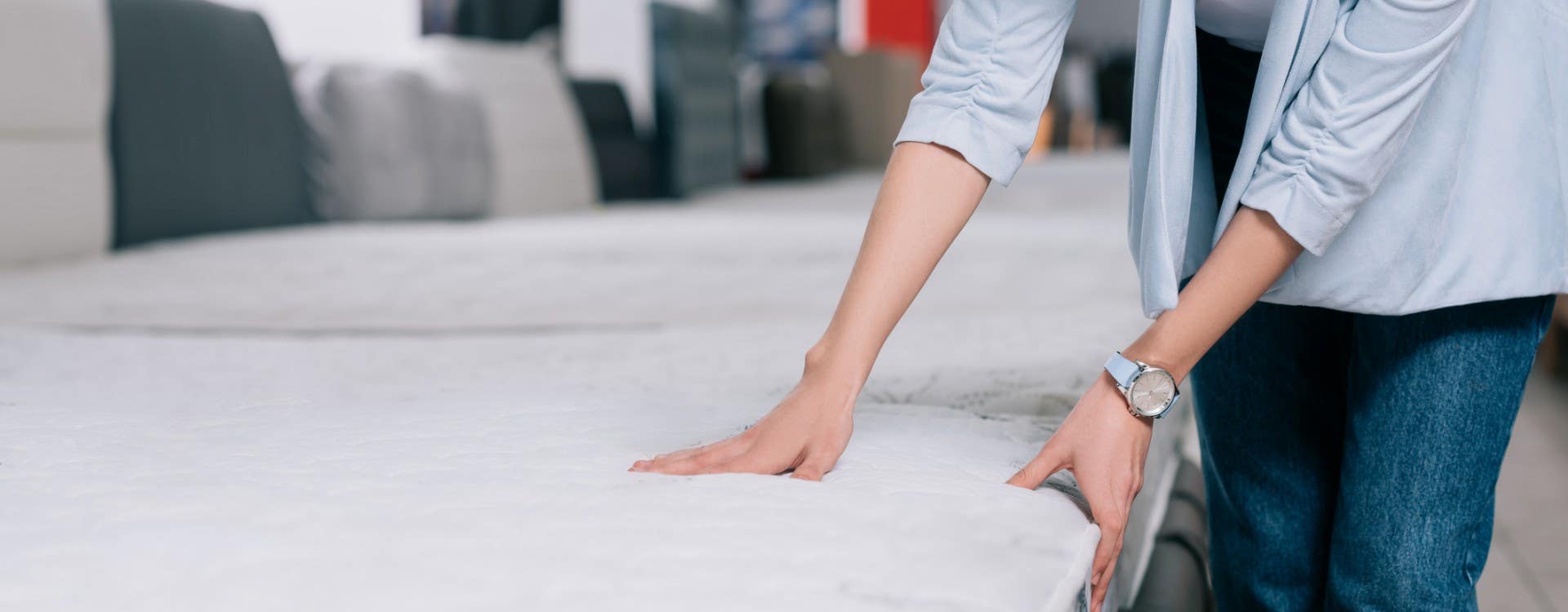
Two mattresses can look almost identical from the outside and feel completely different when you lie down. Memory foam is loved for its close, body-hugging comfort and excellent pressure relief. Latex feels more responsive and buoyant, tends to sleep cooler and generally lasts longer. That’s the real difference between latex and memory foam, and it can change the way you look at mattress buying.
Neither one is better across the board. The right choice comes down to what you want to feel when you lie down, and how you like to sleep.
So, latex or memory foam? Let’s compare them where it actually matters.
Latex vs Memory Foam Mattresses: What’s the Real Difference?
Both materials offer comfort and support. They just get you there in very different ways.
The Feel and Responsiveness of Latex
Lie down on latex, and you feel supported on the surface rather than sinking into it. It still contours to your body, easing pressure and helping keep you aligned, just without the deep mould of memory foam. Its springy quality responds quickly the moment you move; this responsiveness also makes it easier to shift positions through the night.
If you like a bit of bounce or dislike the feeling of sinking into your bed, latex tends to feel more natural.
How Memory Foam Responds to Your Body
Memory foam is a viscoelastic foam that responds to pressure and, in many versions, your body heat, slowly shaping itself around you.
That’s where the familiar hug comes from. Your shoulders, hips and other pressure points settle into the surface as the foam wraps around them, which is why it’s such a favourite for pressure relief.
The trade-off is that memory foam responds a little slower when you move, so changing position can take a touch more effort than it does on latex.
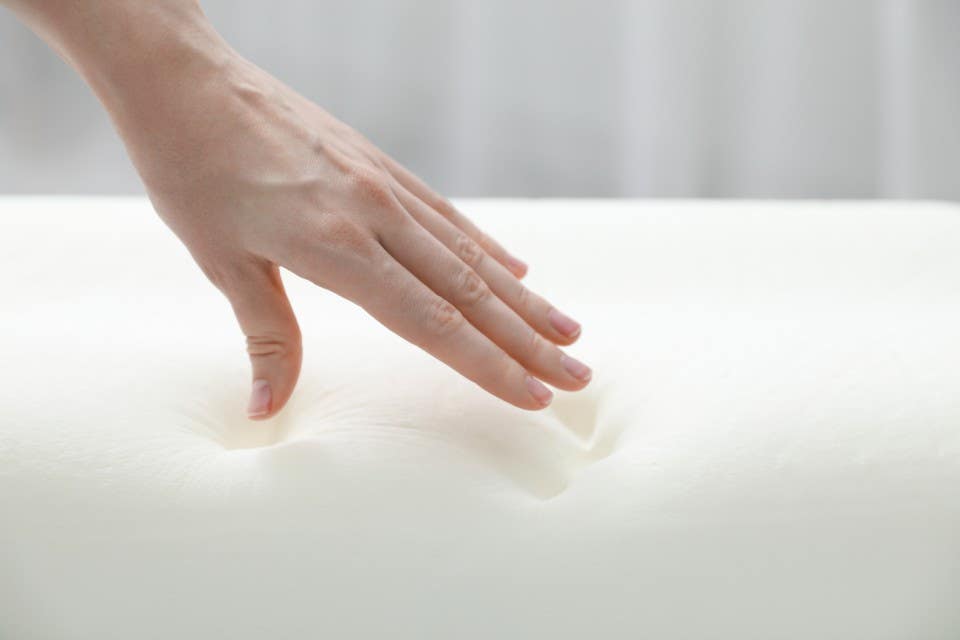 Memory foam shapes itself around you.
Latex vs Memory Foam at a Glance
|
Feature |
Latex |
Memory Foam |
|
Feel |
Responsive, buoyant, gently contouring |
Soft, conforming, body-hugging |
|
Pressure relief |
Good to very good |
Excellent |
|
Spinal support |
Strong, with responsive support |
Strong, depending on construction |
|
Cooling |
Generally cooler |
Can retain more heat |
|
Motion isolation |
Good |
Excellent |
|
Responsiveness |
High |
Lower |
|
Durability |
Generally higher |
Generally lower |
|
Weight |
Usually heavier |
Usually lighter |
|
Off-gassing |
Minimal with natural latex; may have a mild rubbery smell |
More likely to have an initial foam smell |
|
Sustainability |
Natural latex can have a lower environmental footprint |
Generally more dependent on synthetic materials |
|
Estimated price |
Roughly ₹12,500 – ₹19,500 |
Roughly ₹9,500 – ₹15,000 |
|
Best suited to |
Hot sleepers, combination sleepers, durability seekers |
Pressure relief seekers, couples, people who prefer a hugging feel |
Note: These are general tendencies, not guarantees. Construction, density, thickness and quality can change how either material actually performs.
Which Sleeps Cooler?
If staying cool is non-negotiable, latex is the safer bet. If you love the feel of memory foam, look for a design with proper ventilation and cooling features built in.
Latex usually has the edge here. Its structure allows more airflow, and because it doesn’t envelop your body as closely, heat has less chance to build up. It’s widely considered one of the more temperature-neutral mattress materials around.
Memory foam, with its denser, closer-contact construction, can retain more warmth. That said, modern memory foam isn’t necessarily a hot-sleeping experience. Open-cell structures, gel layers and breathable covers can go a long way towards keeping things cool.
Which Is Better for Motion Isolation?
If you or your partner wake easily, memory foam is likely the more restful choice. If a little movement doesn’t bother you, or you’d rather have the ease of getting in and out of bed, latex’s responsiveness might matter more.
Because it hugs your body and absorbs movement, memory foam keeps that movement from travelling across the mattress. Latex offers good motion isolation too, but its natural bounce means a little more movement can carry across the surface.
Latex vs Memory Foam Mattress: Which Lasts Longer?
Latex generally lasts longer. High-quality latex can retain its resilience and shape for around 7.5–8.5 years, compared with roughly 6–7 years for memory foam, although lifespan varies with quality, construction, use and care.
That doesn’t mean every latex mattress will outlast every memory foam one. When comparing durability, look at:
-
Material quality and density
-
Mattress construction and support core
-
Comfort-layer thickness
-
Frequency and intensity of use
-
Warranty terms
The verdict: Latex generally has the edge for longevity, but a well-made memory foam mattress can still provide years of comfortable support.
Latex vs Memory Foam: Price Comparison Range
In India, a latex mattress tends to come with a higher initial investment. The broad range you can expect is around ₹12,000 to ₹20,000, with more expensive versions costing above ₹30,000. On the other hand, memory foam mattresses have more affordable prices upfront, with prices starting around ₹8,000 and going up to ₹30,000 for higher density or premium models.
Note that these ranges are indicative, and you’ll find significant differences depending on size, construction, thickness and brand.
Which Is More Sustainable?
The sustainability picture gets more layered once you look past the word “natural”.
Natural latex tends to have the stronger story here, since it comes from rubber-tree sap rather than being fully petroleum-based. That said, “latex mattress” doesn’t automatically mean “100% natural mattress”. Latex can be natural, synthetic or blended, so it’s worth checking the specifications if this matters to you.
Memory foam is a synthetic polyurethane foam, and its environmental footprint depends on the materials, manufacturing and end-of-life options of the specific mattress you choose.
Durability plays a role too. A mattress that lasts longer means replacing it less often, which is its own kind of sustainability. So when weighing this up, look at the whole lifecycle of the product, not just what the material is called. 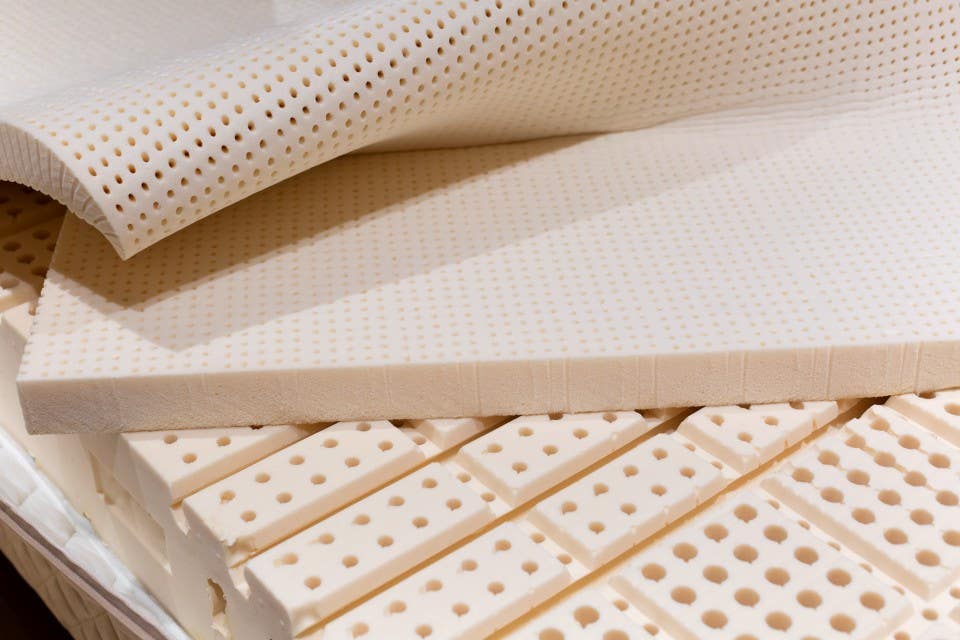 Natural latex mattresses, sourced from rubber tree sap, can offer a lower carbon footprint.
Does Latex or Memory Foam Off-Gas?
A brand-new mattress can sometimes smell a little different when you first unbox it. That’s off-gassing, and it’s more common with memory foam.
Because memory foam is a synthetic polyurethane material, the manufacturing process can release volatile organic compounds (VOCs) that create a noticeable smell after unboxing. It’s usually temporary and airs out with a bit of ventilation.
Natural latex generally doesn’t off-gas the same way, though it can carry a mild, characteristic rubbery smell when new. Synthetic or blended latex may behave a little differently.
If the smell of a new mattress bothers you, give it time to air out in a well-ventilated room before use. Emissions certifications can offer extra reassurance if you’re going the foam route.
So, Which One Should You Choose?
There’s no single winner across every category. The better question is which one fits how you actually sleep.
Memory foam may suit you if you:
-
Love a soft, body-hugging feel
-
Want strong pressure relief around your shoulders and hips
-
Share a bed and want good motion isolation
-
Don’t move around much through the night
-
Prefer a mattress that feels enveloping
-
Want to keep your initial investment lower
Latex may be the better fit if you:
-
Sleep hot and want better temperature control
-
Prefer a responsive, buoyant surface
-
Change positions often through the night
-
Don’t like the feeling of sinking in
-
Want a highly durable material
-
Lean towards natural materials
-
Don’t mind a higher upfront investment
Latex can also help if moving around on deeply conforming foam feels physically difficult, since its responsiveness makes shifting position that much easier.
Final Verdict: Latex vs Memory Foam Mattress – Which One Wins?
Memory foam wins if you’re looking for a deeper hug, strong pressure relief, and excellent motion isolation. Latex comes out ahead if you’re looking for responsiveness, cooler nights, and long-term durability.
Still torn? Forget the material name for a second and think about what you actually want to feel when you lie down. Want your mattress to hold you close? Memory foam is likely your match. Want it to support you while letting you move freely? Latex will probably feel more natural. Ultimately, there’s no universal winner. Choose the comfort that feels like yours.


