A wardrobe is one of those pieces you live with every day, a quiet presence that shapes how at ease your room feels. Get the fit right, and everything from your morning routine to how the room flows just comes together.
Getting there isn’t complicated. It just means working through a few decisions in the right order—storage first, then space, then type, then material, rather than falling for the first design that looks good in a showroom.
Start with What You Actually Own
Before you look at a single design, take stock of what’s going to live inside it. Pull everything out of your current storage if you have to. It’s tedious, but it tells you far more than browsing wardrobe catalogues ever will.
- How much hanging space do your clothes actually need, and how much of it is long dresses versus folded shirts?
- Shoes, bags, and accessories often need entirely different storage logic than clothing does
- How many people are sharing this wardrobe, and does everyone need equal space?
A short decluttering pass before you shop helps you understand how much storage you really need so you don’t end up buying a wardrobe that’s bigger than necessary.
Let Your Room Size Make the Call
Space decides more of this than taste does. A wardrobe that looks stunning in a friend’s spacious bedroom can make yours feel like a corridor.
- Smaller rooms: Sliding doors are the obvious fix, since they don’t swing outward and eat into your walking space. A single-door design works well too, and a built-in mirror does double duty, checking your outfit and making the room feel less boxed in
- Medium rooms: Look for designs that use vertical space well; tall units with the right shelving beat wide ones that eat into the floor
- Larger rooms: This is where you get to choose between a free-standing wardrobe for flexibility or a walk-in for something that feels closer to a proper dressing room
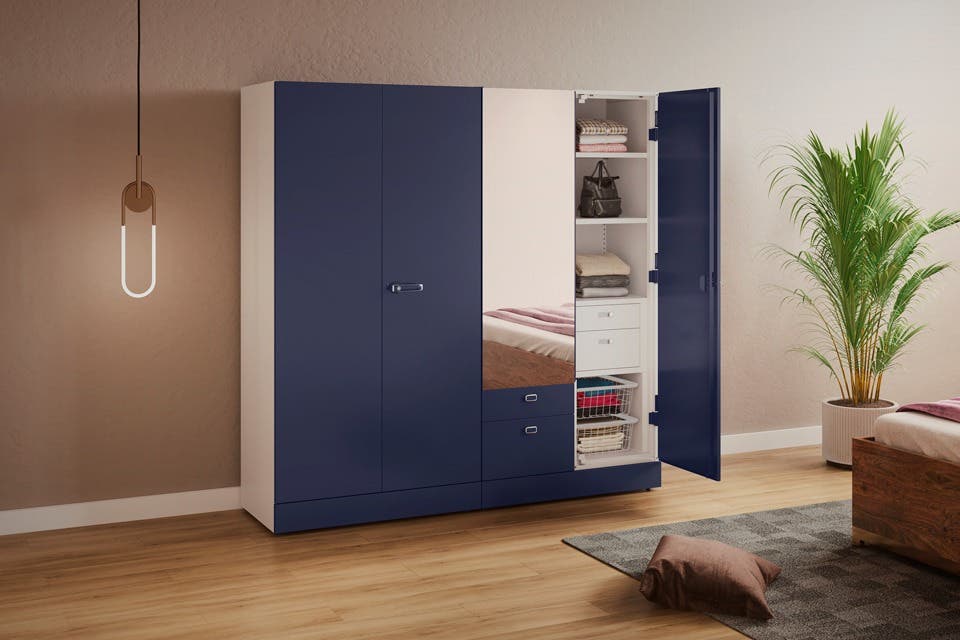 Choose a wardrobe that makes the most of your available space while keeping everyday essentials organised.
Six Wardrobe Types, and Who Each One Actually Suits
Once you know your storage needs and your room’s limits, the type of wardrobe narrows down fast. But the right type isn’t just about what fits; it’s about which one matches how you actually live and how you want to feel walking into your room.
Hinged Door: The Traditional Favourite
There’s something satisfying about doors that swing fully open and show you everything at once: no guessing, no shuffling hangers to find what you want. It’s a classic look, and if you grew up with one in your parents’ room, there’s a good chance it feels like home in a way newer designs don’t. It works best when your room has enough clearance for the doors to swing without hitting the bed or a chair.
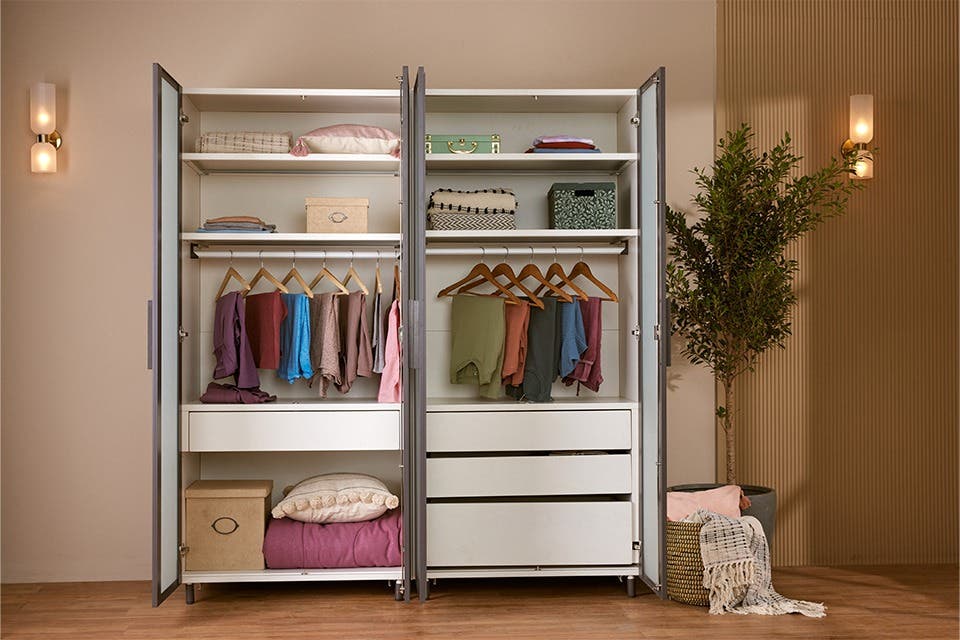 Traditional hinged wardrobes are perfect for larger rooms.
Free-standing: For People Who Rearrange Their Life Often
If you’ve moved flats twice in the last five years, or you’re the type who repaints a wall on a whim, a free-standing wardrobe is built for that restlessness. It travels with you instead of being left behind, which matters if your sense of home is more about the things you carry than the address on the lease. It also tends to leave extra storage space above it, handy in rooms with higher ceilings and the off-season clothes you’d rather not think about until winter.
Sliding Door: Built for Tight Spaces
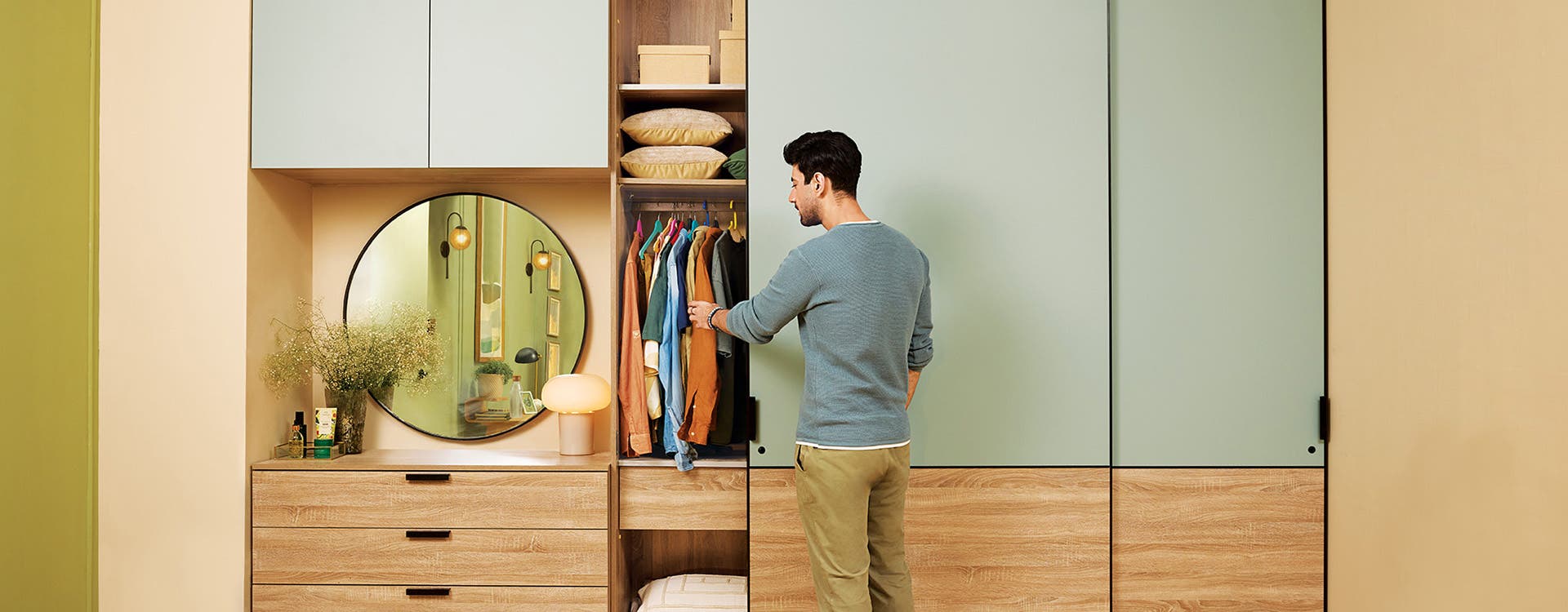
Sliding doors solve the exact problem hinged doors create: no extra clearance needed, ever. That’s a real relief in a small bedroom, where every wasted foot of floor space is one you notice daily. They pair particularly well with a built-in dressing table too, so getting ready doesn’t mean squeezing past furniture at 8am. In more spacious bedrooms, sliding wardrobes create a clean, contemporary look that feels luxurious, with expansive door panels that become a design feature in their own right.
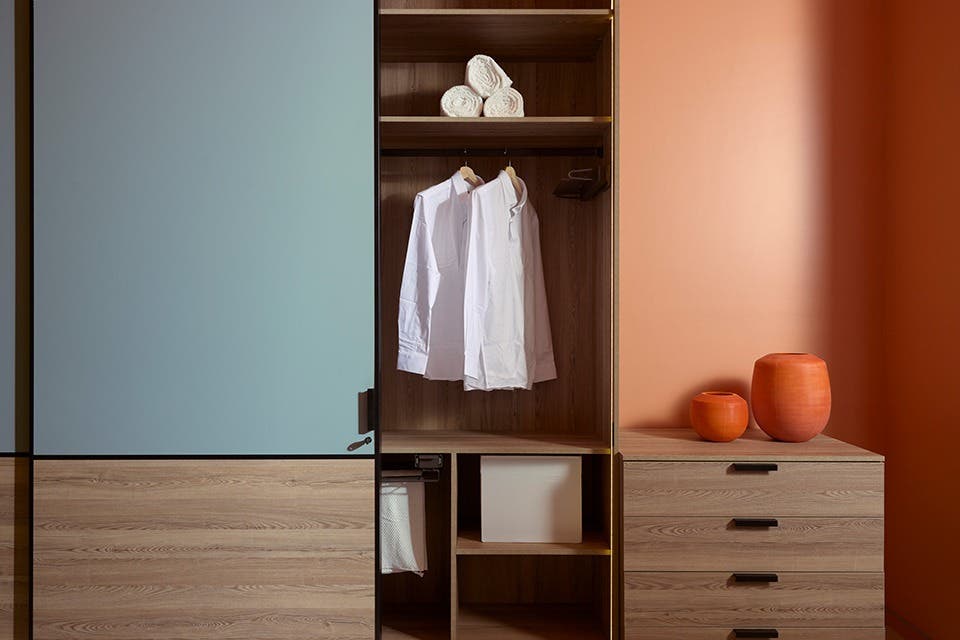 A sliding wardrobe never needs any extra clearance.
Walk-In: For When Storage Becomes Its Own Room
A walk-in wardrobe is what happens when storage stops being a piece of furniture and becomes a small room of its own, one built entirely around how you like things arranged. Everything gets a designated spot, which means no more digging through a drawer half-awake, looking for one specific top you know you own somewhere. It’s a genuine indulgence, and it only really makes sense if your bedroom has the square footage to spare.
Modular: For Households That Keep Changing Shape
Families change over time, and your storage needs change with them. A new baby, a child moving out, a parent moving in—connector-based modular construction means the wardrobe adapts to the change instead of the other way round.
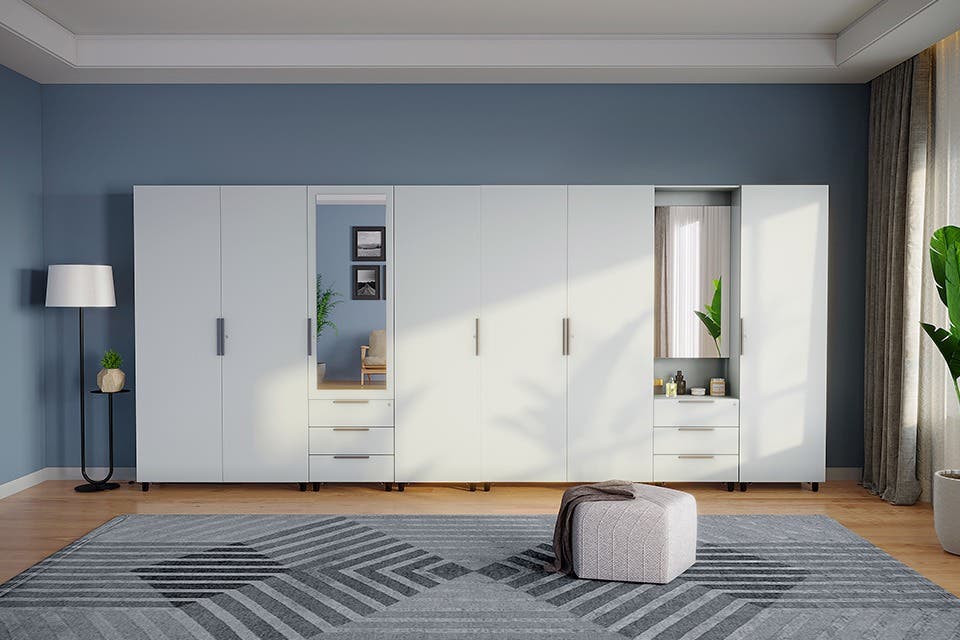 Modular wardrobes grow and shrink as per your requirements.
Customised: For Rooms That Don’t Play by Standard Dimensions
Odd-shaped rooms, low ceilings, an awkward alcove… sometimes nothing off-the-shelf will ever fit right, and it’s frustrating to keep hunting for a design that never quite comes. A customised design solves this by working with the exact space you have, not a standard one. It can also fold in extras like a dressing unit or a TV panel if that’s how you picture the room.
What It’s Made of Matters More Than It Looks Like It Does
Sure, the material decides how the wardrobe holds up over years of daily use, but it also quietly says something about the room it’s in. Here’s the practical trade-off behind each choice:
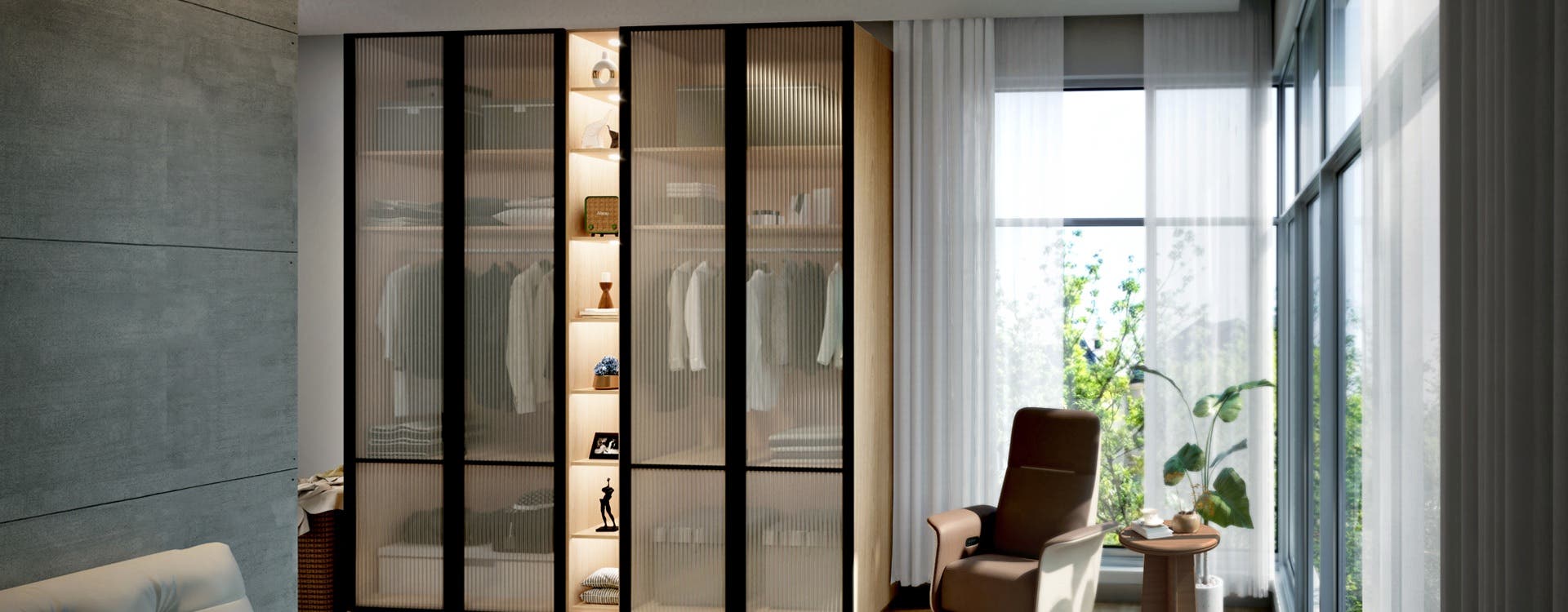
- Metal or glass: A sleek, contemporary look that’s good if your room’s aesthetic already leans modern
- Engineered wood with Duralam: A classic, timeless finish with a slightly more premium feel
- MDF: Durable and budget-friendly, without giving up much on style
- Steel: The most cost-effective option for sheer sturdiness, especially useful in humid climates
None of this means you’re stuck picking the safe option. If a colour or finish feels like an odd choice on paper but keeps drawing your attention, that’s usually worth considering.
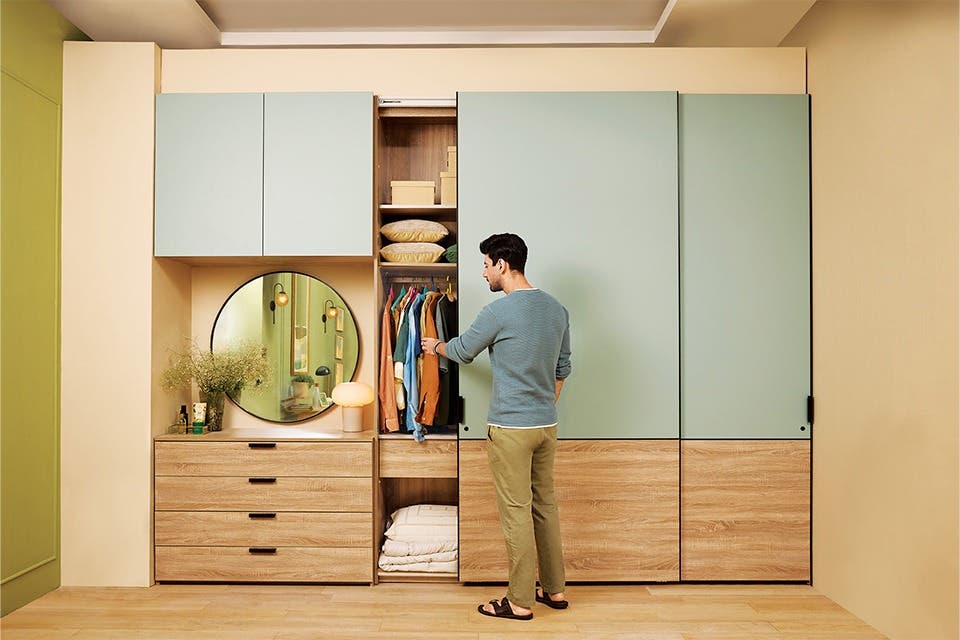 The right material and finish help your wardrobe complement the overall look of your bedroom.
Getting It Right, Once
Work out what you own, measure the room honestly, pick a type that matches how you actually live, and choose a material built for the long run rather than just the showroom lighting. Get those four right, and the wardrobe stops being just storage. It starts looking like it was actually made for you.
Interio’s wardrobe range covers every one of these directions, so wherever you land, there’s a design built for it.