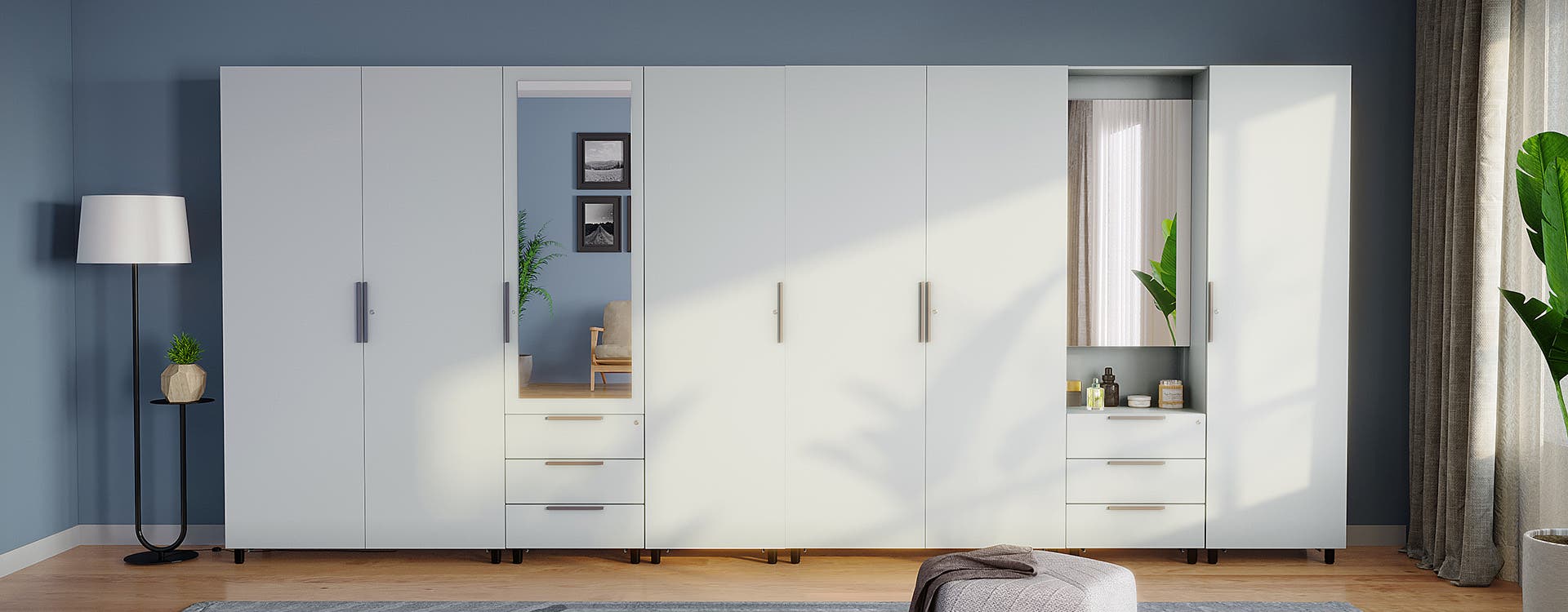
Ask three people what to call the tall unit in the bedroom, and you may well get three answers. The words overlap so often that even furniture listings use them interchangeably, but the pieces work quite differently. For generations, the steel almirah was a milestone purchase in Indian homes, gifted at a wedding or bought for a first home and looked after for decades. It now gets mixed up with a cupboard, meant for storing whatever needs storage, and a wardrobe, meant solely for clothes. Knowing which piece suits which job is the surest route to a room that stays calm and organised.
Wardrobe vs Almirah: Which Suits the Way You Live?
Picture your busiest morning. When the shirt you need is pressed and hanging within reach, the day starts on the right foot. That is what a wardrobe does best. Meant for clothes, its hanging rail keeps office wear and occasion outfits crease-free, while drawers and shelves hold everything else. Many modern designs add mirrors and sliding doors.
A sturdy freestanding unit, traditionally made of steel, the almirah offers a different kind of comfort: the quiet assurance that what matters is safe. Its steel body, lockable doors, and inner locker have guarded jewellery, documents, and festive silks for decades. Almirahs lean towards shelves rather than long hanging space, which suits folded clothes, linen and anything you want to keep secure.
The difference, then, comes down to purpose: a wardrobe is organised around hanging clothes, while an almirah is organised around shelves and security. So which should you buy? If your days call for crisp, ready-to-wear outfits, a wardrobe is likely to suit you better. If security, sturdiness and easy upkeep top your list, an almirah will serve you well. The lines keep blurring too: steel wardrobes such as Slide N Store bring sliding doors to metal, while many wooden wardrobes now include lockers.
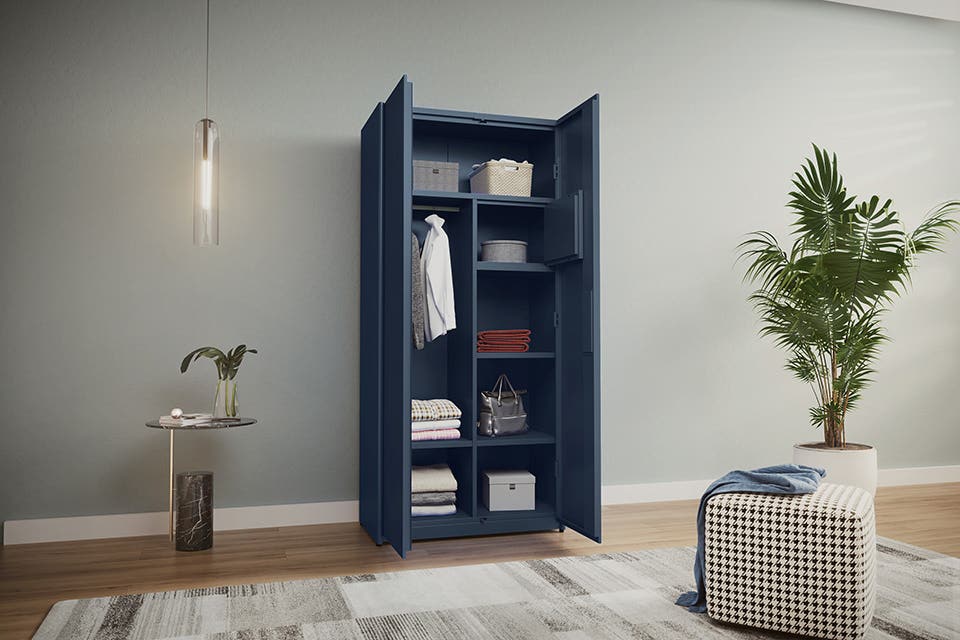 An almirah’s shelves and inner locker keep folded clothes and valuables secure.
Where the Cupboard Fits In
If the wardrobe belongs to your clothes and the almirah guards your valuables, the cupboard keeps the rest of the house in order. The word “cupboard” covers almost any enclosed unit with shelves behind doors: a crockery cupboard in the dining room, a linen cupboard in the hallway, or a cabinet for books and board games in the living room.
That broad purpose is what sets a cupboard apart from a wardrobe or almirah. A cupboard usually relies on plain shelves and is defined more by where it lives and what it holds than by what it was built for. Cupboards can be freestanding or built into a wall, and many do store clothes, but they are rarely planned around hanging space or lockers.
Built-in cupboards make the most of alcoves and awkward corners, and they suit homes you own and plan to stay in. Freestanding pieces move with you, which matters if you rent or expect to relocate.
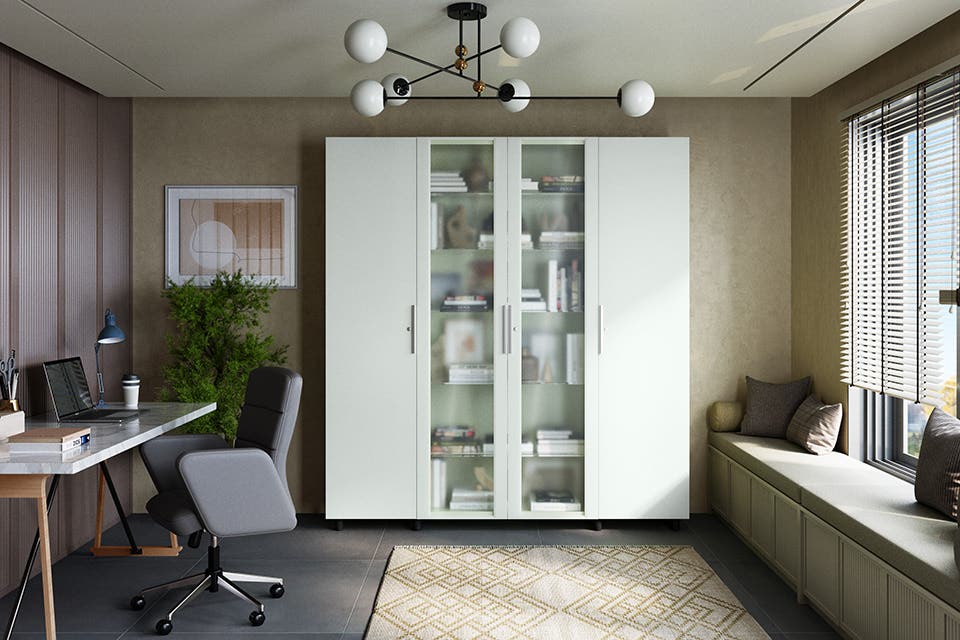 A cupboard adapts to whatever a room needs to hold.
What to Weigh Before You Decide
The right choice starts with how you use your room, not the label on the product. Three questions make the decision much clearer:
-
What you store: Notice how much of your clothing hangs and how much folds. Hanging-heavy collections need a rail, while folded clothes, linen and paperwork suit shelves.
-
How much room you have: Measure the floor and the space in front of it. Hinged doors need clearance to swing open, while sliding doors work well where a bed sits close by.
-
How your climate behaves: Steel is not vulnerable to termites, but prolonged exposure to moisture can lead to rust, so wipe condensation or spills promptly in humid climates. Good engineered wood with a sealed finish holds up well too, as long as it stays away from damp walls.
Security and moving house are worth a thought as well. If you keep valuables at home, an inner locker is worth looking for. If you move often, knock-down designs that are assembled on site make each relocation simpler.
Planning Storage Room by Room
Choosing the right storage furniture comes down to giving each piece the job it does best, and most homes end up using all three. Planning room by room makes those choices simple.
Start with the main bedroom, where a wardrobe usually earns its place. Map what you own before you buy: long dresses and suits need full-length hanging, while kurtas and shirts fit a shorter rail with shelves below. Leave some empty space for what the next few years may bring.
In a guest room, a parents’ room or any space where valuables need a safe home, an almirah is a dependable choice. Cupboards then fill the gaps, from a child’s room full of toys and books to a study that needs a home for files.
Finally, match the finish to the room. A wardrobe in a warm wood tone can anchor a bedroom, while steel almirahs now come in shades such as ivory, russet, and sea green that sit comfortably in almost any space. When every piece has a clear job, clutter has fewer places to hide.
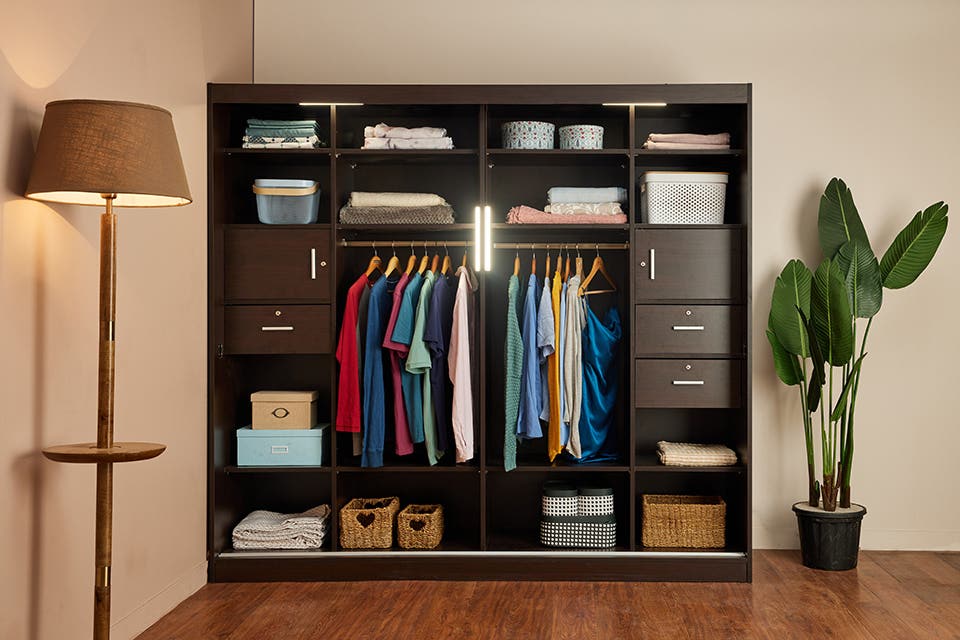 A mix of full-length and shorter hanging space makes room for everything.
Storage That Grows with Your Home
Whether you choose crisp hanging space, steel-clad peace of mind or flexible shelving, the right storage gives you more than room for your things. It frees you to focus on what comes next. Explore Interio’s wardrobes, almirahs and storage online or at a store near you, and find the piece that fits the way you live.