


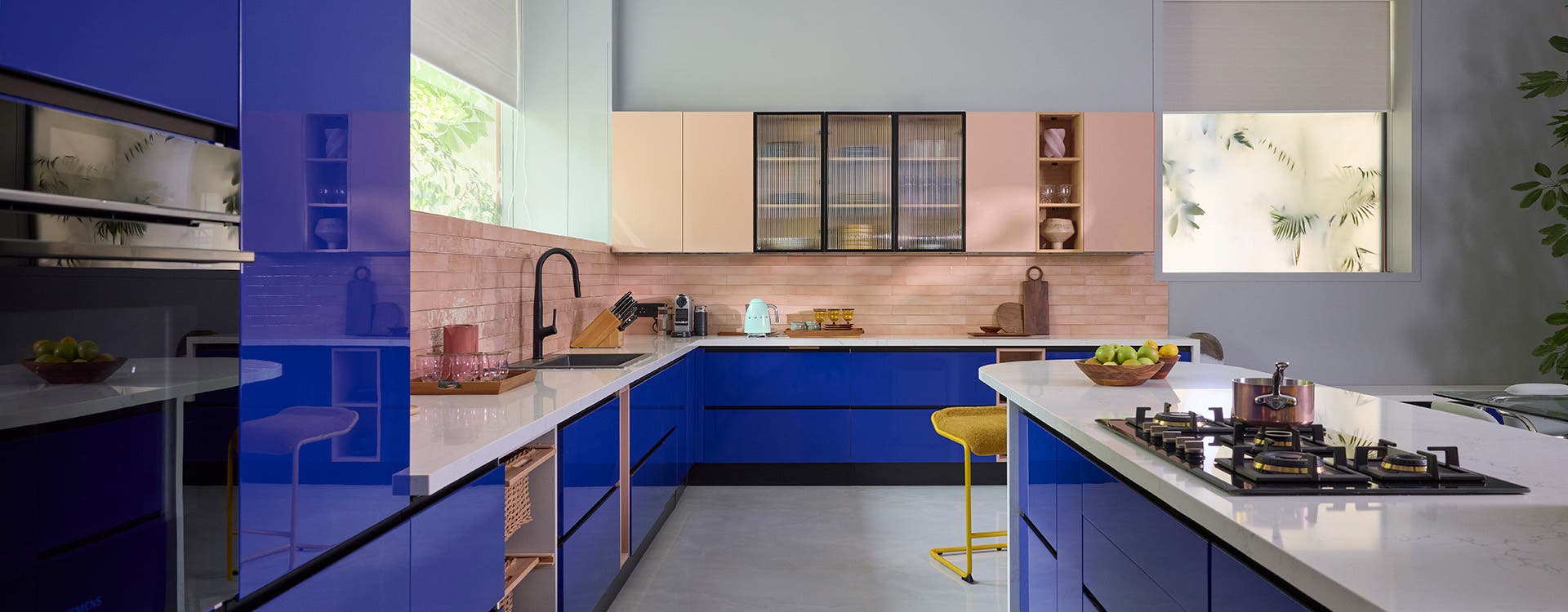
A kitchen is more than a collection of cabinets and countertops. How its spaces, storage, and surfaces come together can change how you cook, organise and move through the room. A modular kitchen ties all these things together, giving you the perfect layout for the way you move through the heart of your home. No hunting for the ladle mid-recipe, no jostling for counter space while chopping onions, no wondering where you put the spice you bought last week.
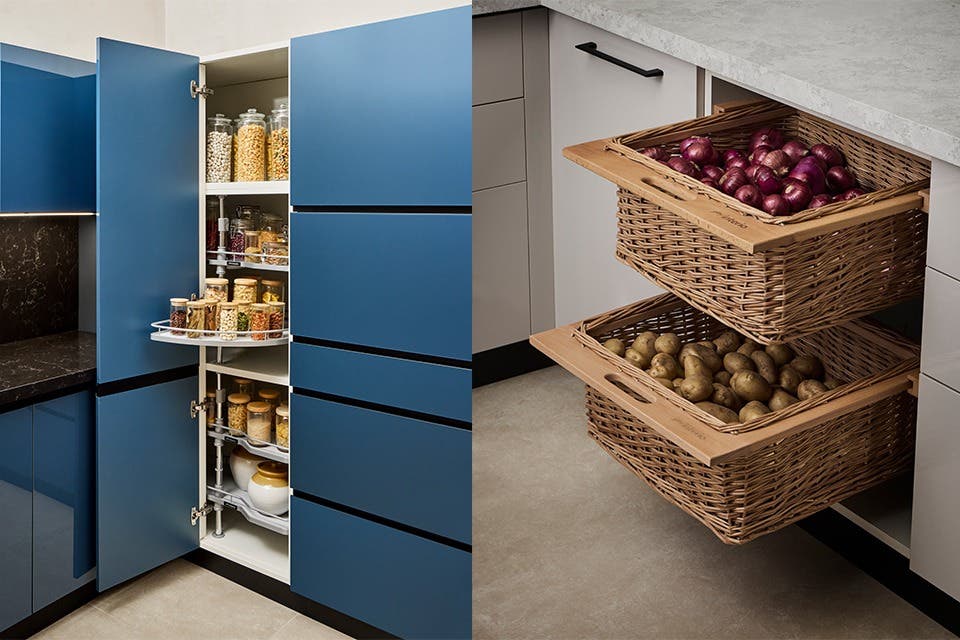 If you want optimised storage, well-designed cabinets, and easy installing, a modular kitchen is for you.
What Makes a Kitchen Modular?
The word ’modular’ refers to the individual components that make up the kitchen. Rather than constructing every element on-site, a modular kitchen brings together pre-designed units that can be combined in different configurations to suit the available space.
These modules can include base cabinets, wall cabinets, tall units, drawers and specialised storage accessories. Their sizes, finishes and configurations can be selected according to the kitchen layout, storage requirements, and the way the space will be used. Unlike kitchens built largely on-site, every inch is pre-planned for function, from where you keep your spices to how far you reach for a pan.
What Are the Main Components of a Modular Kitchen?
A modular kitchen is really a set of building blocks that come together around how you cook. Along with its defining modular kitchen features, like zoned storage and factory-made finishes, here’s what typically makes up the whole:
-
Base cabinets: Sit below the countertop and hold cookware, utensils and everyday groceries within easy reach.
-
Wall cabinets: Mounted above the counter, keeping frequently used items close without crowding the worktop.
-
Tall units: Run floor to ceiling, often doubling as a pantry or housing for the oven and other appliances.
-
Drawer systems: Dedicated compartments for cutlery, spices and smaller tools, so nothing gets buried at the back of a cabinet.
-
Countertop: The main workspace, in materials like granite, quartz or laminate depending on budget and finish.
-
Hardware and accessories: Soft-close hinges, pull-out baskets, corner carousels and similar fittings that quietly make daily cooking easier.
-
Integrated appliances: Built-in hobs, microwaves, refrigerators, chimneys and ovens, where the layout and budget allow, for a more streamlined look.
Together, these are what let a kitchen feel considered rather than assembled, each part designed to work with the others, not just sit beside them.
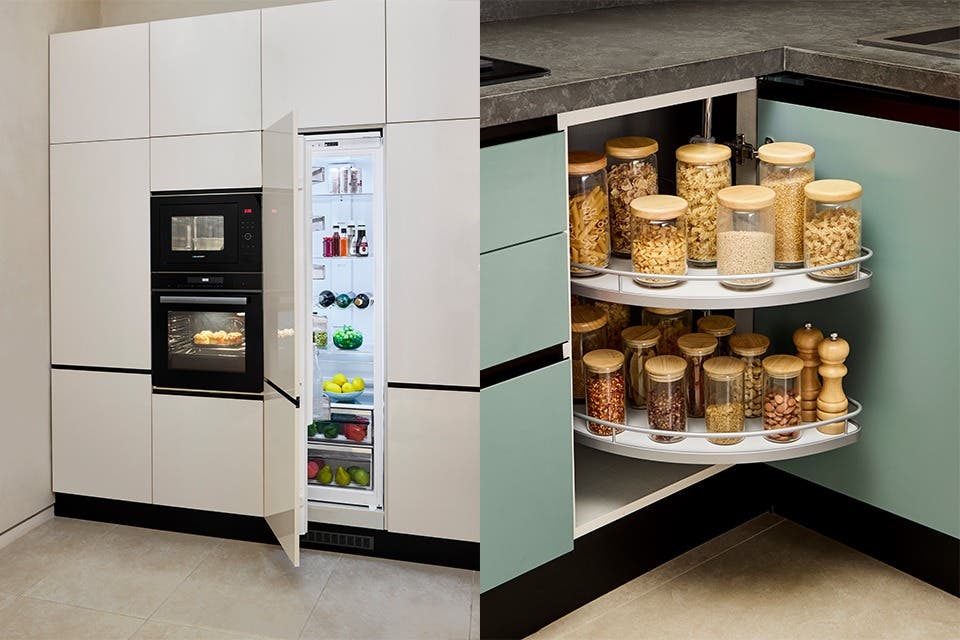 Smart storage solutions like integrated appliances and a corner unit make daily cooking and cleaning effortless.
What Are the Different Types of Modular Kitchens?
Modular kitchens generally fall into five layouts, each suited to a different kind of home and household:
-
Straight (single-wall): Compact and simple, ideal for studio or smaller apartments.
-
L-shaped: Uses two adjoining walls, freeing up the centre of the room.
-
Parallel (galley): Two facing counters, well-suited to homes where more than one person cooks.
-
U-shaped: Wraps around three walls for maximum storage and counter space.
-
Island: Adds a standalone counter to any base layout, best for larger kitchens that double as a gathering spot.
What Are Some Modular Kitchen Benefits?
The advantages of modular kitchen layouts go beyond just a shiny finish. Here’s what genuinely tends to hold up in daily use:
-
Less disruption during installation: Because components are manufactured off-site and assembled at home, there is generally less cutting and fabrication taking place in your kitchen, which can mean less dust, noise and disruption than building everything on-site.
-
Faster, more predictable installation: Factory-made components can make the installation process more streamlined, helping you get your kitchen up and running sooner.
-
Better-planned storage: Modules can be designed around different needs, from everyday drawers and cabinets to corner units and pull-outs, helping you make better use of the available space.
-
Consistent finish and quality: Components manufactured in controlled factory conditions can deliver a more uniform finish across cabinets and panels. With Interio, carefully selected materials, engineered components, and professional installation are designed for the demands of everyday kitchen use.
-
More choice and customisation: Modular kitchens offer a wide range of cabinet configurations, finishes, hardware, and storage accessories, allowing you to create a kitchen that reflects both your space and your preferences.
-
Easier maintenance and replacement: Individual components can often be accessed, repaired or replaced without dismantling the entire kitchen, depending on the design and availability of parts.
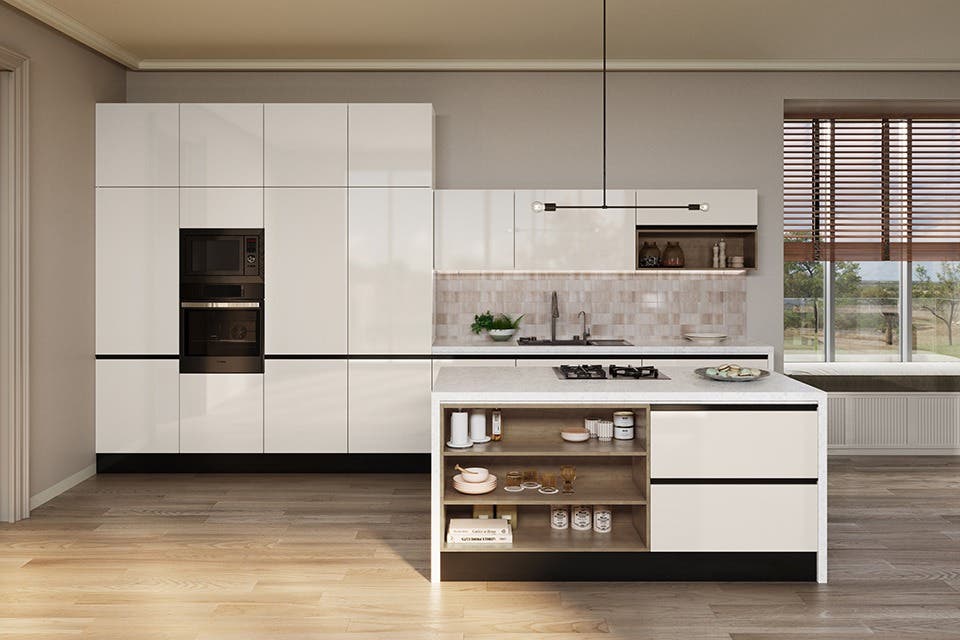 Every module, from cabinets to countertops, is designed to work together seamlessly in your designated space.
What Are the Disadvantages of a Modular Kitchen?
No look at modular kitchen pros and cons is complete without the trade-offs. Here’s what’s worth going in prepared for:
-
Higher initial investment: A modular kitchen can cost more than a basic traditional kitchen, particularly with premium finishes, hardware and specialised storage. In return, you may get a more consistent finish, better-planned storage and a more streamlined installation process.
-
Less flexibility for unusual spaces: Standard modules work best in reasonably regular layouts. Sloping walls, unusual corners or challenging dimensions may require custom solutions, which can increase the cost.
-
Quality varies by materials and workmanship: Not all modular kitchens are made to the same standards. The boards, finishes, hardware and installation quality can all affect durability, particularly in a space exposed to moisture, heat and daily use.
Weighing these up honestly, rather than only reading the highlight reel, is what makes the decision easier further down the line.
Modular Kitchen vs Traditional Kitchen: What Is the Difference?
When people compare a modular kitchen with a traditional kitchen, they’re essentially comparing two different ways of creating the same space. Here’s a look at the differences:
|
Consideration |
Modular Kitchen |
Traditional Kitchen |
|
Where it’s made |
Components are factory-manufactured before reaching your home |
Most elements are constructed on-site |
|
How it’s assembled |
Pre-made modules are simply fitted together according to a planned design |
Fitting in each component, including drilling in cabinets and fixing shelves, happens on-site |
|
Design approach |
Works from a system of standardised modules and available configurations |
Can be shaped more freely around unusual dimensions and site conditions |
|
Changes during installation |
Changes may be limited once manufacturing is complete |
Adjustments can generally be made during on-site construction |
The key distinction is where and how the kitchen is made. The practical implications of that difference, such as installation time, cost, disruption and flexibility, depend on the specific design and materials chosen. Neither choice is automatically better. The right choice depends on your space, priorities and how much customisation you want during the design and installation process.
How to Choose the Right Modular Kitchen for Your Home? Things to Consider
Two things tend to settle the decision more than anything else: how you actually live day to day, and what you’re comfortable spending.
Budget: how much does a modular kitchen cost?
Cost varies widely depending on the size of your kitchen, materials, finishes, hardware and accessories. Basic laminate kitchens are generally more affordable, while premium finishes, branded hardware and integrated appliances can significantly increase the overall investment. Accessories such as corner units and pull-out systems can also add to the cost.
Before committing, compare a few detailed quotes and check exactly what each includes. Cabinetry, hardware, countertops and appliances aren’t always bundled into the initial price, so understanding the full scope upfront can help you avoid unexpected costs later.
Lifestyle: who should choose a modular kitchen?
A modular kitchen may suit households that value a predictable installation process, organised storage and a consistent finish. It can work particularly well for frequent cooks, busy families or anyone who prefers less on-site disruption.
Traditional kitchens may be better suited to unusual layouts, tighter budgets or homes where extensive on-site customisation matters more than installation speed, standardised modules or the ability to upgrade individual elements over time.
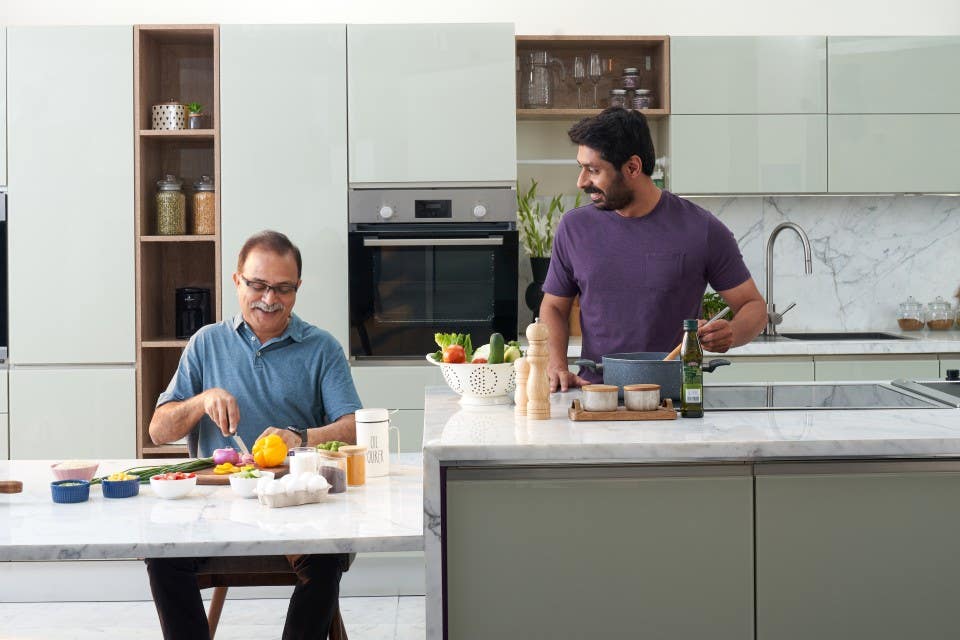 A well-planned modular kitchen brings ease to everyday routines.
How to Maintain a Modular Kitchen?
Modular kitchens are generally easy to live with day to day. A few simple habits keep them looking their best for years:
-
Wipe down surfaces with a soft cloth and mild detergent rather than abrasive cleaners, which can dull laminate and acrylic finishes.
-
Deal with spills, especially oil and water, quickly, so they don’t seep into joints or edges.
-
Check hinges, handles and channels every few months, and tighten anything that’s come loose.
-
Watch for early signs of moisture damage, like swelling near the sink or hob, since these are far easier to fix early than late.
Explore Your Options
If you’d like to see what a modular kitchen could look like in your home, Interio’s collections are available to browse online or in-store. It’s a good idea to compare these against a traditional set-up for your specific space before making a final call.