


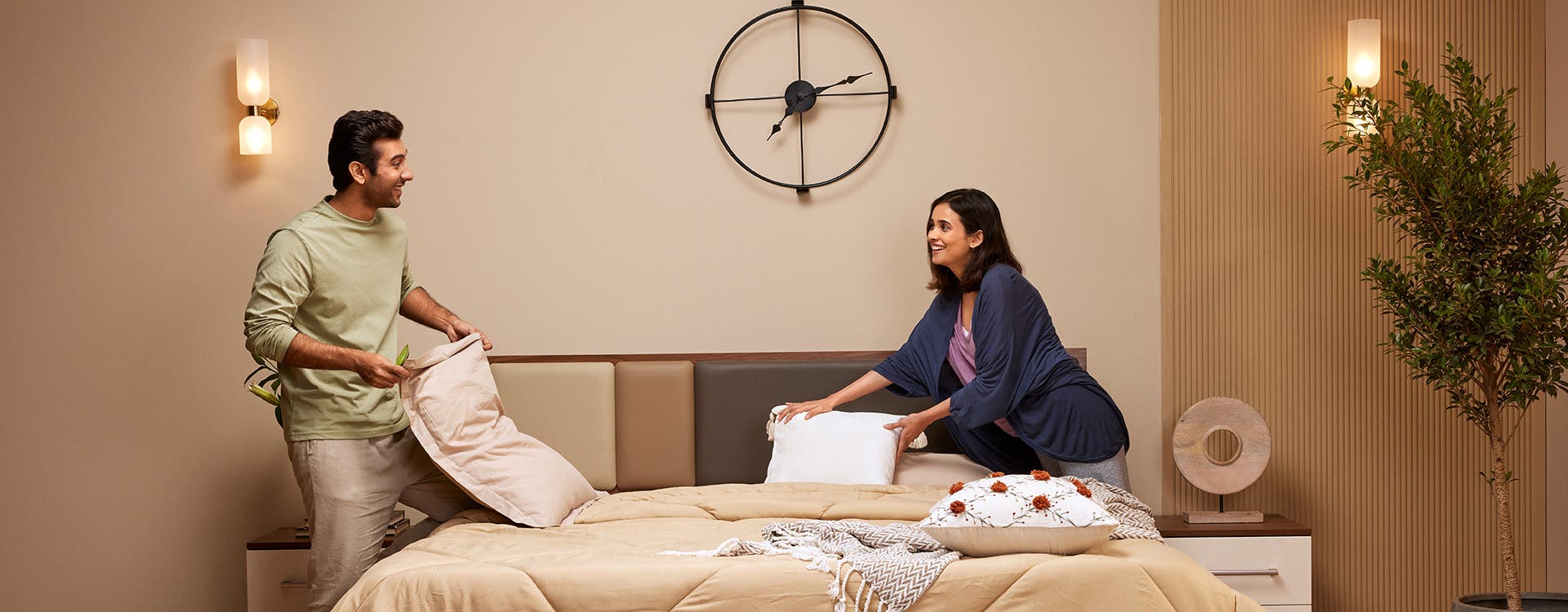
Moving in together is a milestone that’s thrilling right up until moving day, when you’re staring at two sofas, three coffee makers, and no clear answer for whose furniture stays. The choices you make in those first few months quietly set the tone for how the space, and the life inside it, ends up working. Here’s where to start.
1. Start With What You Actually Need
Before a single thing gets bought, sit down together and decide what deserves a place in this new chapter. It sounds practical, but it’s really the first real act of building a life together: choosing, as a team, what comes with you and what gets left behind.
Do this well, and moving day goes from a negotiation to the beginning of a life together.
2. Choose a Sofa That Fits How You’ll Actually Use It
The sofa is the first big decision you’ll make as a household, and is usually the first piece of furniture that feels like it belongs to both of you rather than either of you. A generous living room can hold a symmetrical sofa set, a modular sectional keeps things flexible as your evenings change shape, and a double recliner is worth it if comfort is non-negotiable.
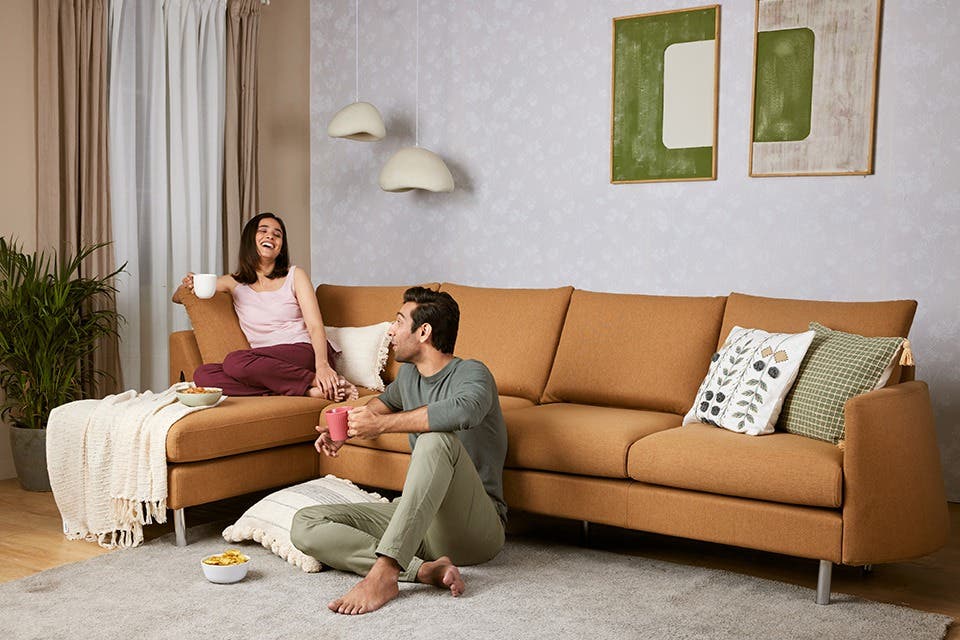 Choosing a sofa together is one of the first real decisions of a shared home.
If space or budget is tight, a sofa-cum-bed gives you a spare bed without needing a spare room — one less thing to worry about when friends stay over. Keep a couple of bean bags or pouffes tucked away too, so the house never feels caught off guard when it fills up.
3. Make Room for Both Togetherness and Time Apart
Living with someone means learning to share a space without losing your own sense of it. A reading corner with nothing more than an armchair, a throw and a lamp; a yoga mat’s worth of space on the balcony; a small gaming setup tucked into a bedroom corner — these are small investments that pay off in a much bigger way, giving each of you somewhere to simply be without needing to explain why.
Balance that with a spot built for being together on purpose: a double recliner for movie nights or a small bar table for the odd night in with cocktails. A home that holds up better over time is one that holds space for both people.
4. Let Storage Do the Heavy Lifting
Two households becoming one usually means twice the belongings, so storage-smart furniture earns its keep fast. A foldable dining table with benches works well if you host often, and nesting tables in the living room can expand or tuck away depending on the day.
- Customised shelving to display books, mementos and the odds and ends that don’t have a home yet
- Storage baskets and ottomans with hidden compartments, for the things you’d rather not see every day
- A bed with an attached nightstand or headboard storage, so you skip a separate purchase altogether
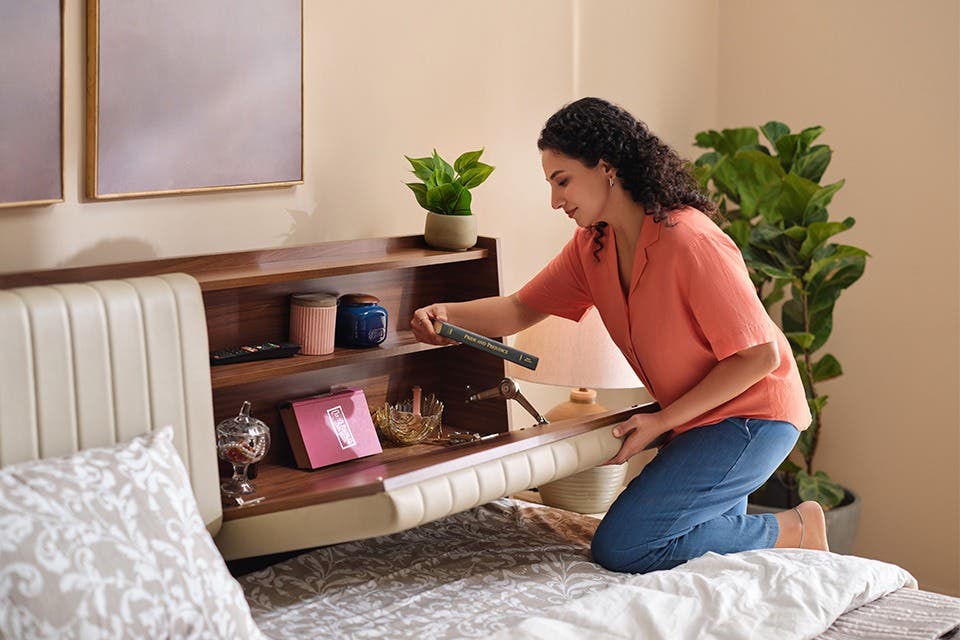 A little built-in storage goes a long way in a shared bedroom.
A modular bed or one with built-in storage can also save you from buying a separate wardrobe, freeing up a corner for whatever you need it for, even if that’s just breathing room. Floating shelves are worth considering too; they use the walls instead of the floor and add a bit of dimension to the room while they’re at it.
5. Choose Pieces That Can Wear Two Hats
Multipurpose furniture is one of the more underrated ways to save both space and money when you’re just starting out together. A dressing table that doubles as a coffee table, moved between rooms as needed, is a small trick that pays off often. The same goes for a sectional sofa that expands for the odd movie night with friends.
 A sofa that expands when the evening calls for it.
If you want extra seating without crowding the room with chairs, an ottoman table does double duty as both a coffee table and backup seating when guests turn up. Convertible tables are worth a look too, useful as a desk one day and a dining table the next.
A Home That’s Actually Both of Yours
Moving in together comes with more adjustments than furniture alone can solve, but getting this part right matters more than it seems to at the time. Approach it the way you’ll approach everything else in this chapter: together, with a plan, and room to change your minds later. Do that, and the house stops being where you both happen to live and starts being the place you’re building, on purpose, together.


