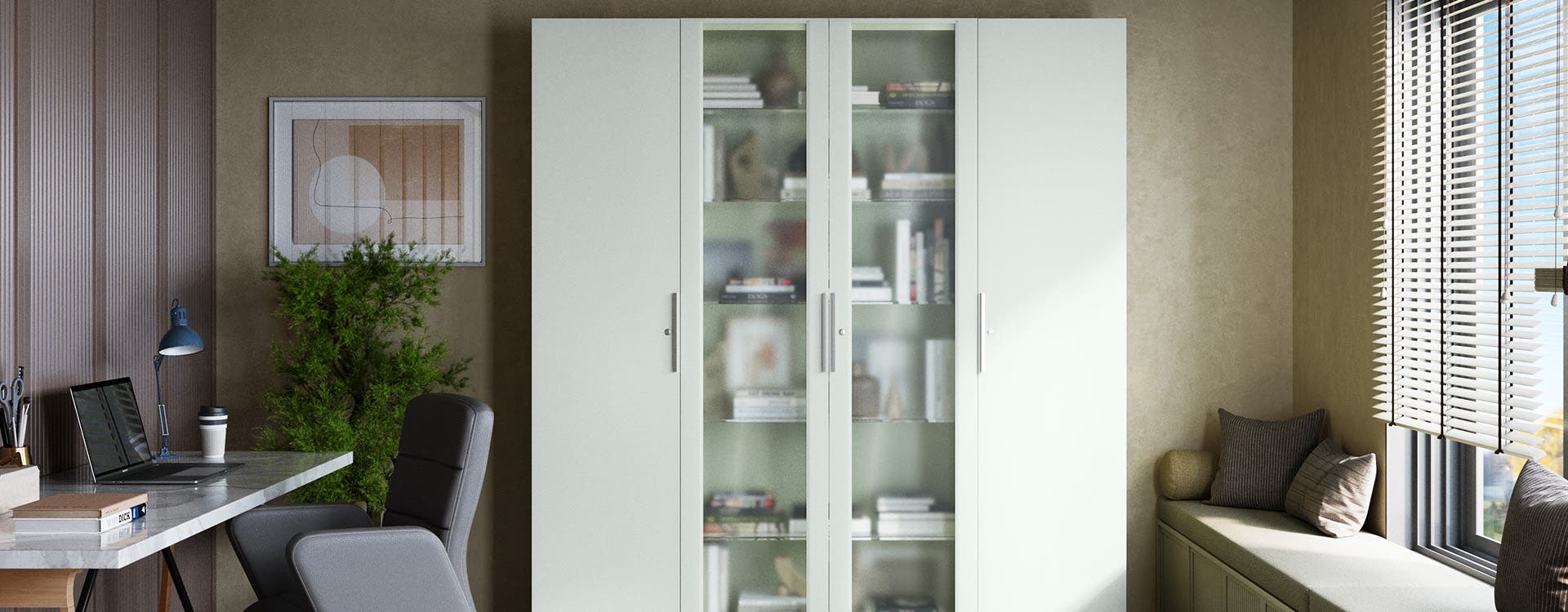
Most bookshelf shopping starts the same way: books have taken over a side table, a windowsill or the top of a cupboard, and it’s finally time to give them a proper home.
Before choosing a design, think about what you’ll be storing.
- Mostly books? Prioritise sturdy shelves with enough depth and height for your collection.
- Books and décor? Look for a design that balances open shelving with enough display space for photographs, keepsakes or artwork.
- Valuable or inherited books? Glass-fronted shelves offer added protection from dust and humidity while keeping them on display.
Once you know what your bookshelf needs to do, choosing the right size and style becomes much simpler.
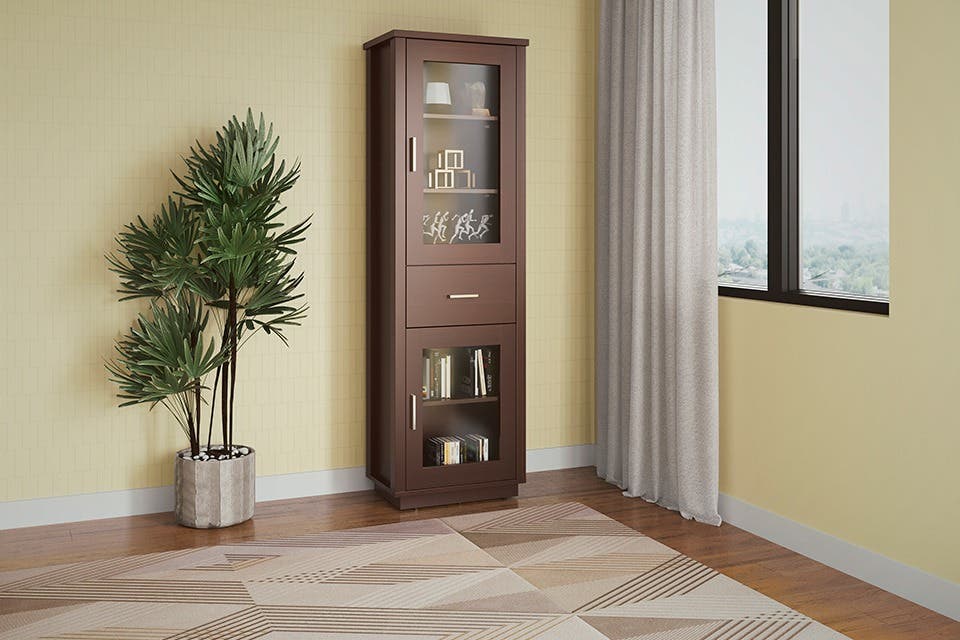 Glass-fronted bookshelves protect your collection while keeping your favourite books on display.
Getting the Size Right
A well-proportioned bookshelf feels like it belongs in the room. It offers enough space for your favourite books, keeps everyday essentials within easy reach, and complements the furniture around it without overwhelming the space.
The right fit starts with a few simple measurements. Measure both your wall and the books you plan to store, so the bookshelf suits both your room and your collection. Storage needs will point you toward a size, but it’s worth confirming with an actual measuring tape rather than a guess.
Step 1: Measure the width and height of the available wall.
Step 2: Check how much depth you can comfortably allow without blocking nearby furniture or walkways.
Step 3: If your collection includes oversized coffee-table books or large reference books, make sure the shelves are at least an inch taller and deeper than your largest book so everything fits neatly.
Those measurements will quickly narrow down your options. If you have a long, uninterrupted wall, a wider bookcase can showcase a growing collection beautifully. If floor space is limited, think vertically instead. Wall-mounted shelves, particularly above a console table or chest of drawers, make the most of unused wall space while keeping the room feeling open and uncluttered.
Keep bookshelves at least 2 inches away from AC vents or windows that get direct airflow. Constant air movement can warp the shelf material over time, and trapped humidity is a fast way to get mould on your books.
Colour Changes More Than the Look
Once the size is sorted, colour is next. Bookshelves come in wood tones running from pale to nearly black, or a painted finish if you’d rather match something already in the room.
Mahogany brings a deep, reddish warmth that reads as classic rather than trendy. Lighter woods, white oak, or a pale painted finish do something more useful in a compact room: they make the walls feel like they’re giving a little more space back.
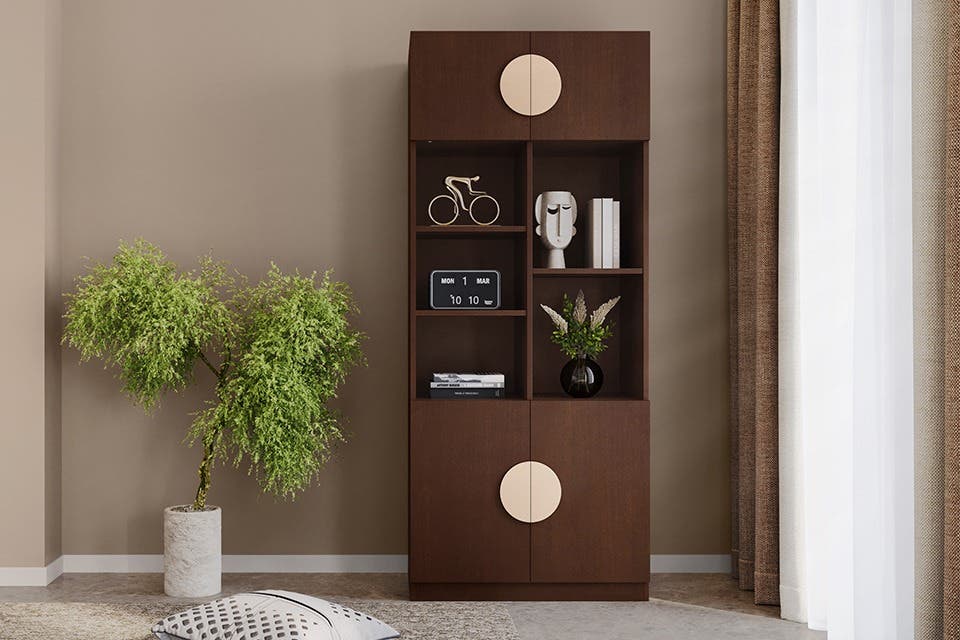 A warm wood finish adds character while blending beautifully with contemporary interiors.
Built to Actually Hold the Weight
There’s a particular disappointment in watching a shelf sag under the weight of a collection you were proud of building. A shelf that looks good empty can behave very differently once it’s carrying two years of hardbacks, festival gift books, and whatever your child’s school insisted you buy this term.
Wood tends to hold up the longest and ages well, which matters if this is a collection you plan on adding to for years rather than months. Metal and plastic cost less and wipe clean easily, a reasonable trade if the shelf is going in a busy, high-traffic part of the house where looks matter less than practicality.
In humid or coastal cities, this decision carries a bit more weight. Damp air and the occasional termite problem can shorten a wood shelf’s life if it isn’t treated properly, and there’s nothing worse than realising too late that a shelf has started giving way. Ask about humidity tolerance and advisable treatments before you buy, not after something starts to sag.
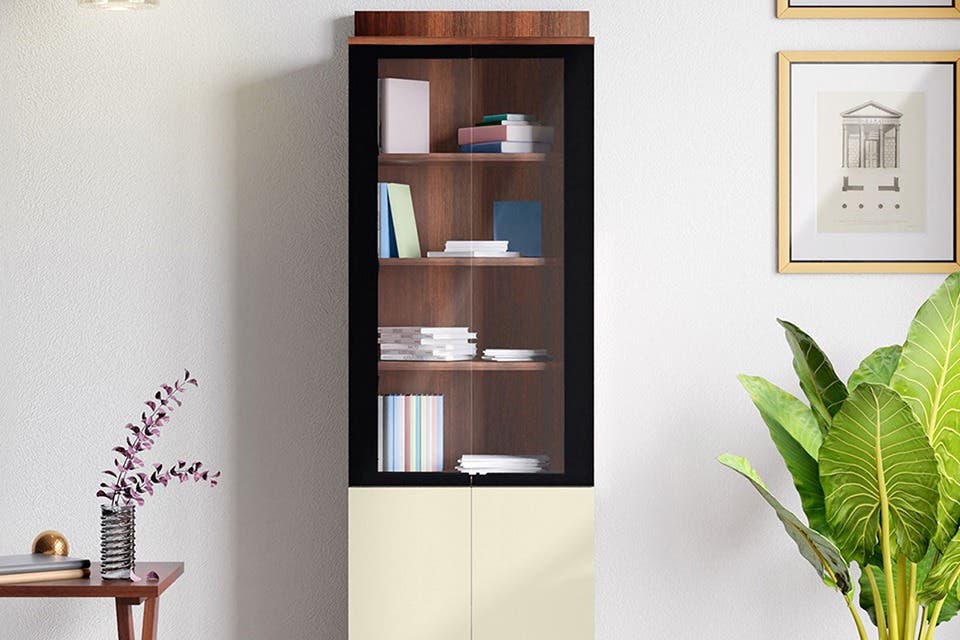 Durable bookshelves provide reliable support for books, décor, and everyday essentials.
Pick a Shape That Matches How You Actually Use It
Bookshelves aren’t one-size-fits-all, and the right shape usually says something about how you actually spend time with your books, not just how the shelf photographs.
- Cube: Flexible in size and arrangement, works equally well wall-mounted or freestanding. A good fit if you like rearranging your space every so often, or if your collection and your taste are both still finding their shape
- Corner: Makes use of a part of the room that would otherwise sit empty, a smart pick in smaller flats where every foot counts
- Ladder: Light, easy to move, and best suited to a smaller, well-loved collection of a rereader rather than one that’s still growing
- Wall shelves: Slim and open, built as much for display as storage, ideal if your books share space with photo frames, travel finds, or the odd memento you’d rather show off than tuck away
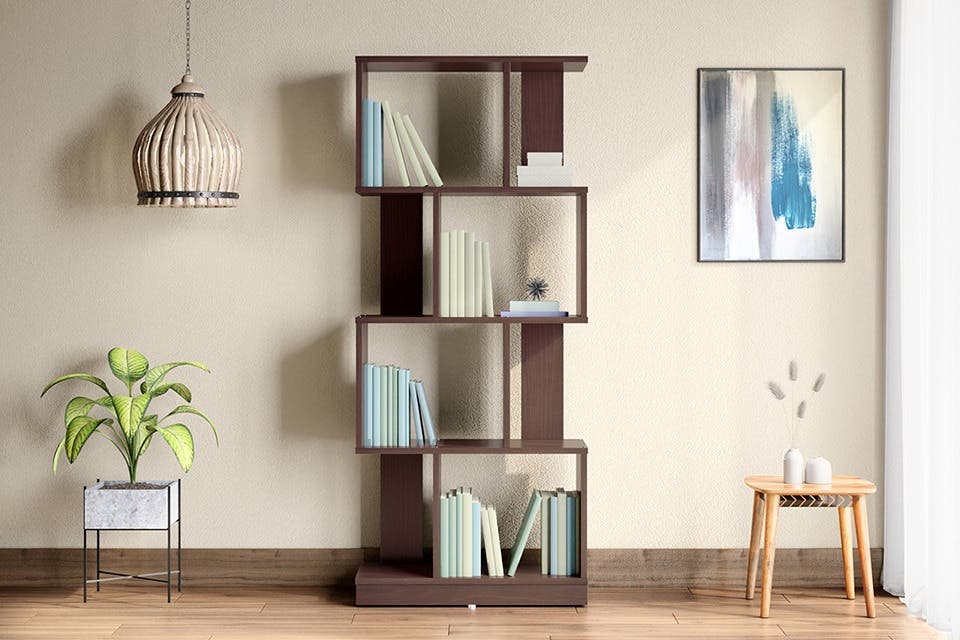
Minimalist shelving keeps books organised while adding visual interest to your walls.
Read the Room, Quite Literally
A bookshelf is far from storage; it’s a conversation starter that speaks volumes about the home it’s in. There’s no single right choice here, only the one that actually matches your space and your shelf full of half-finished paperbacks.
Interio’s range of bookshelves covers most of these shapes and finishes, so whichever direction fits your room, there’s a design built for it.