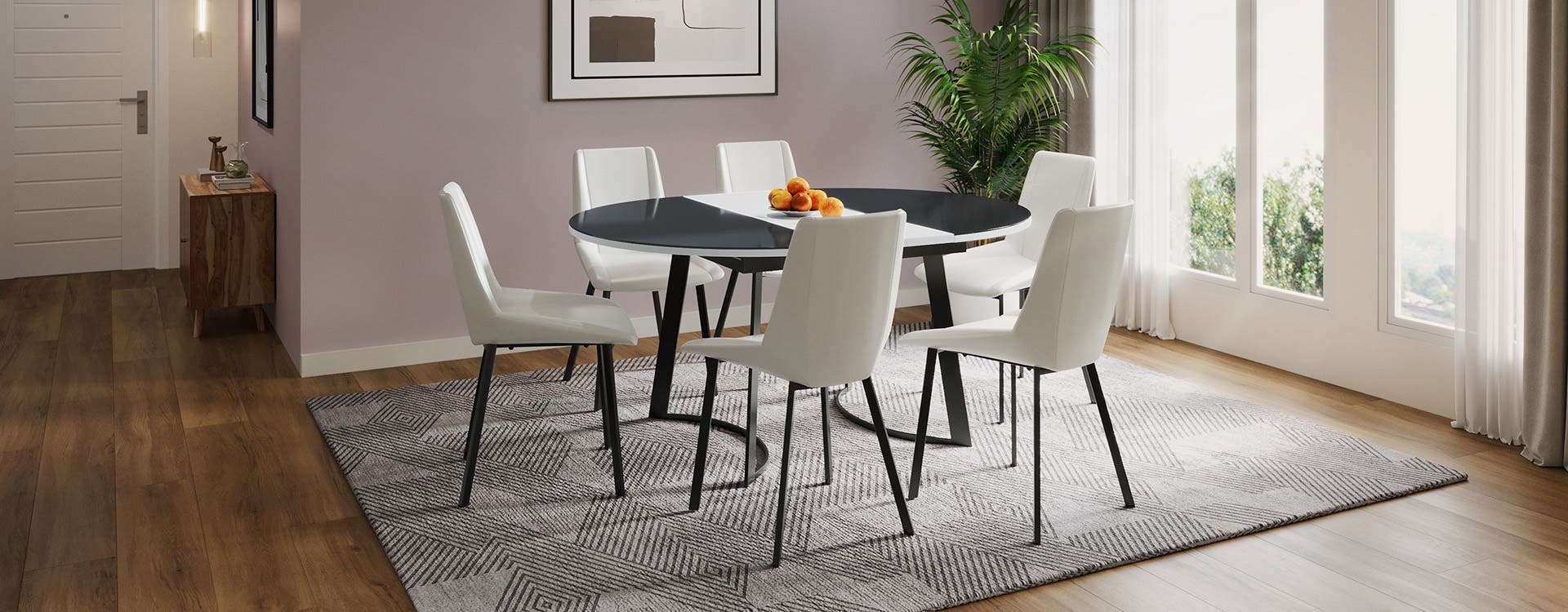
Walk into any home and you will find tables quietly at work everywhere. A dining table anchoring family dinners, a coffee table catching the everyday clutter, a bedside table holding whatever you reach for at night. Choosing the right one is about understanding how each room is actually used. This guide walks through different types of tables, room by room, so your choice fits your life rather than just your floor plan.
Which Table Belongs in Which Room?
Think about what suits each room, how much space it needs, and the clearance required for everyday comfort. A few extra inches can be the difference between a table that works seamlessly and one that gets in the way.
|
Room |
Table Type(s) |
What Matters Most |
|
Entry and hallways |
Console |
Keeping the path clear |
|
Living room |
Coffee, side, nested |
Reach and movement around seating |
|
Dining room |
Dining, console |
Elbow room and per-person spacing |
|
Bedroom |
Bedside |
Easy reach from the bed |
|
Study and home office |
Study |
Matching the surface to the work |
|
Balcony and patio |
Outdoor |
Weather-ready materials |
Entry and Hallways: First Impressions Start Here
Even a narrow entryway benefits from somewhere for the everyday handoff.
Console Tables
A console table becomes the landing spot for everyday clutter, keys, mail, bags and other essentials, giving your entryway a genuine sense of purpose.
Choose a slim profile that won’t interrupt hallway traffic, ideally with a drawer or shelf underneath for storage without the bulk of a full cabinet. Keep the space in front of it clear enough for people to pass through comfortably. A mirror above or a small tray for keys and post can turn a functional corner into a welcoming one.
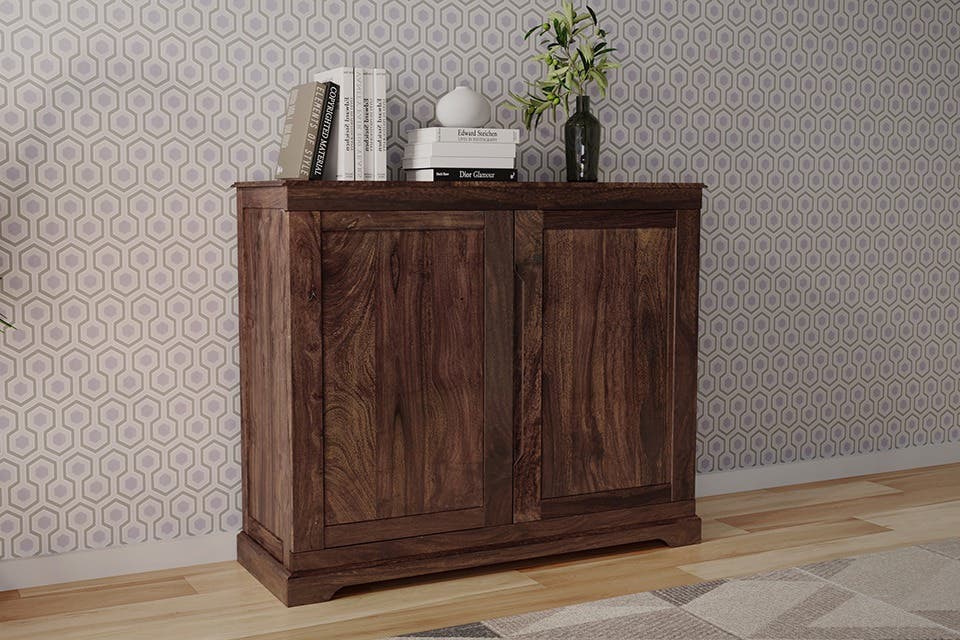 A console table turns a busy entryway into a considered one.
Living Rooms: Where One Table Is Rarely Enough
Your living room can benefit from more than one type of table, depending on how you use the space.
Coffee Tables
A coffee table is the everyday anchor of the room, holding everything from your morning cup and current book to the remote and snacks when guests arrive.
Rectangular tables suit longer sofas, while round or oval shapes soften a room with straight lines, and nested options add extra surface for guests without permanently using more floor space. Leave 16 to 18 inches between sofa and table, enough to sit down, get up and move around without squeezing past.
Side Tables
A side table might be small, but it’s genuinely useful: a spot for a coffee cup, glasses or a lamp within arm’s reach of the sofa or armchair. A compact design works for most seating. Or size up with a shelf for extra books; just keep it clear of the walking path around the sofa or armchair.
Nested Tables
Nested tables slide neatly under one another, giving you extra surface exactly when you need it, ideal for smaller living rooms or an evening that turns into an impromptu gathering. Once separated, leave enough space around each one to move freely.
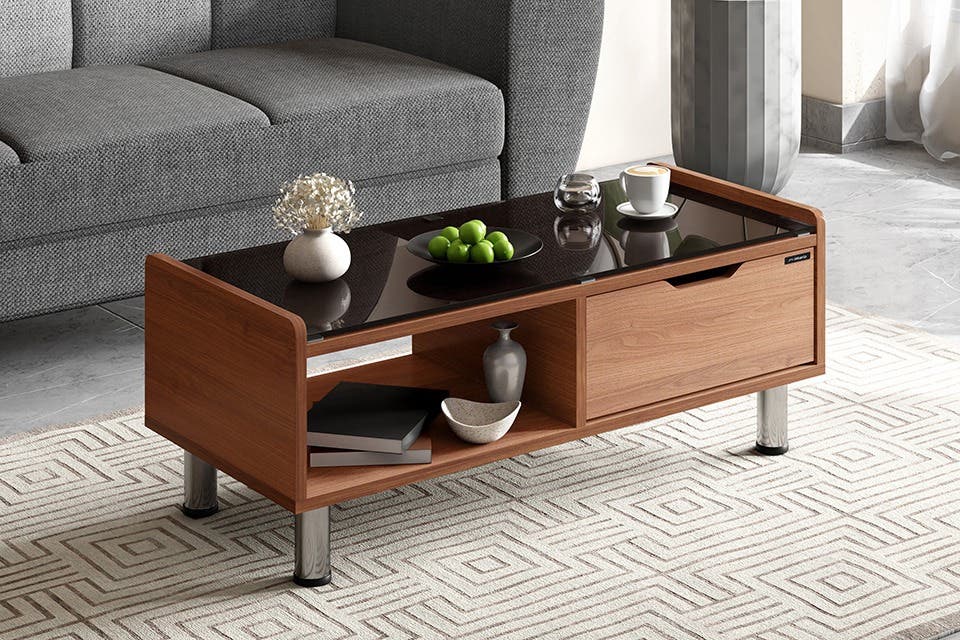 A sturdy coffee table in the living room makes a bigger difference than you’d think!
Dining Rooms: More Than Just Mealtimes
A dining room is where the family comes together for everyday moments, from homework and games to shared meals and conversations. That’s why the dining table rarely does just one job.
Dining Tables
This is where the day comes together. On any given day, the table might host breakfast, a laptop for a work call, homework spread across the surface, and eventually, dinner with the whole family gathered around.
Rectangular tables suit longer rooms and larger households, round tables work well in smaller or square dining areas, while oval or extendable designs are useful when you occasionally need more seating.
Allow around 24 inches of table edge per person and at least 36 inches between the table and the nearest wall or furniture, more if the space doubles as a walkway. Measure with the chairs pulled out; it’s the table in use, not at rest, that decides whether a room feels comfortable.
Console Tables
A console table can also earn its place here, providing space for serving dishes, displaying décor, or keeping everyday essentials close at hand. A slim or round design against a wall keeps the dining table free for the meal itself.
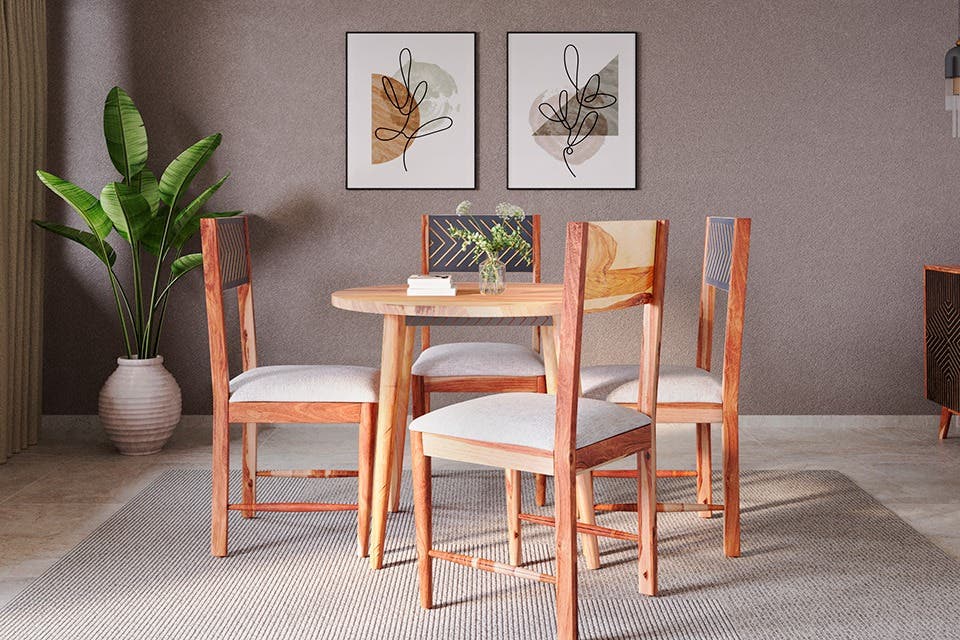 A wooden dining table brings the household together, long after the meal itself is over.
Bedrooms: Small Table, Big Role
The bedroom is your space to unwind and recharge, with a bedside table keeping the little things you need at night and in the morning within easy reach.
Bedside Tables
It is easy to overlook the bedside table until it is missing. It’s the one surface that keeps everything within reach: the lamp you switch off last, the book you are reading, the water you will want at 2am and the phone you will reach for before your eyes are even open.
Choose one at the height of your bed, with drawers to keep things out of sight or an open shelf to keep books and essentials in view. In a smaller room, one well-chosen table may be all you need; just leave enough room beside the bed to move and open drawers freely.
Study and Home Offices: Where Focus Needs a Surface
In a study or home office, the table needs to do more than fill a space. It should give you enough room to spread out, stay organised and work comfortably, whether you’re writing, reading or working on a screen.
Study Tables
From a child’s homework station to a student’s project corner or the desk where you spend half your working week, a study table can serve many purposes. Design around how you actually work, not just how they look in the room.
Compact tables suit laptops and smaller rooms, while drawers or a shelf keep stationery and files organised. A height-adjustable design is worth it if you like to alternate between sitting and standing. A typical height sits around 28 to 30 inches, depending on your chair and your own proportions, with room behind it to push back and stand up freely.
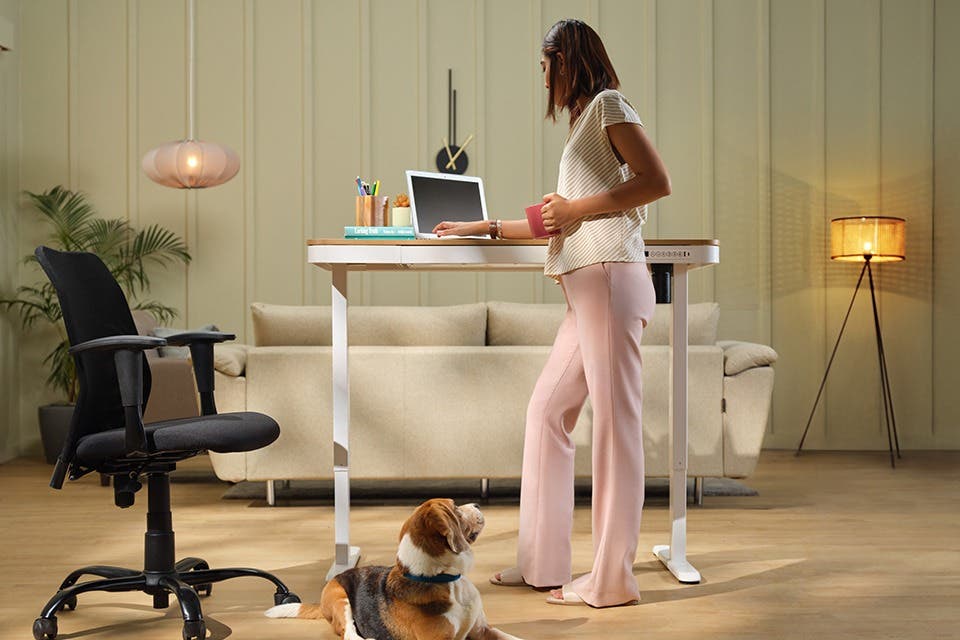 Your study table should be designed to keep up with however you work.
Balconies and Outdoor Patios: Home Extends Outside
A balcony, terrace or garden becomes a genuine extension of your home once there is a table to gather around, whether that is morning chai outside or dinner once the evening cools down.
Outdoor Tables
Outdoor tables bring everyday life outside, so they need to hold up to sun, rain and humidity, with finishes made for the outdoors rather than an indoor piece pressed into service. For compact balconies, a small round or foldable table gives a useful surface without eating into space.
The Right Types of Tables Make Room for What Matters
There are different kinds of tables to choose from, but narrowing it down does not need to be complicated. Start with the room, think about how you actually use it, and let shape and material follow from there. At Interio, our table collection spans dining, coffee, study, console and bedside designs across wood, engineered wood, metal and glass. Explore the full range online or in-store and find the table that is ready to hold whatever your day brings to it.