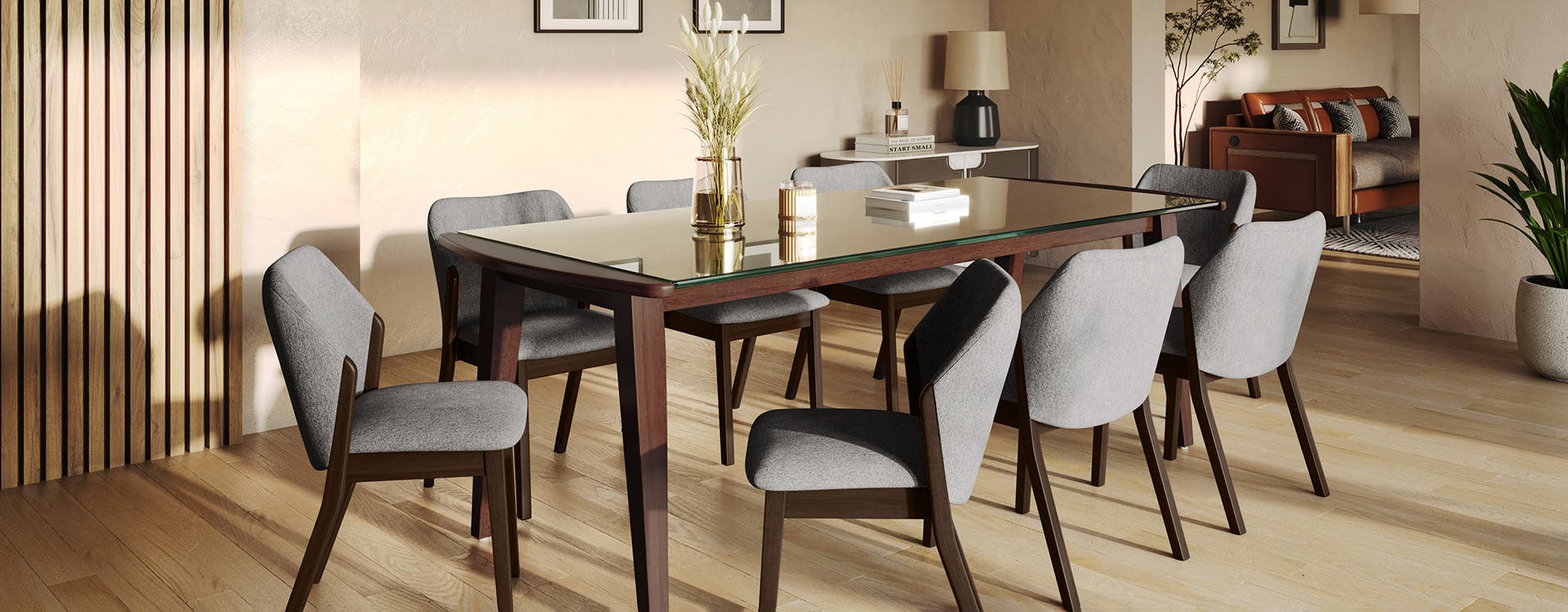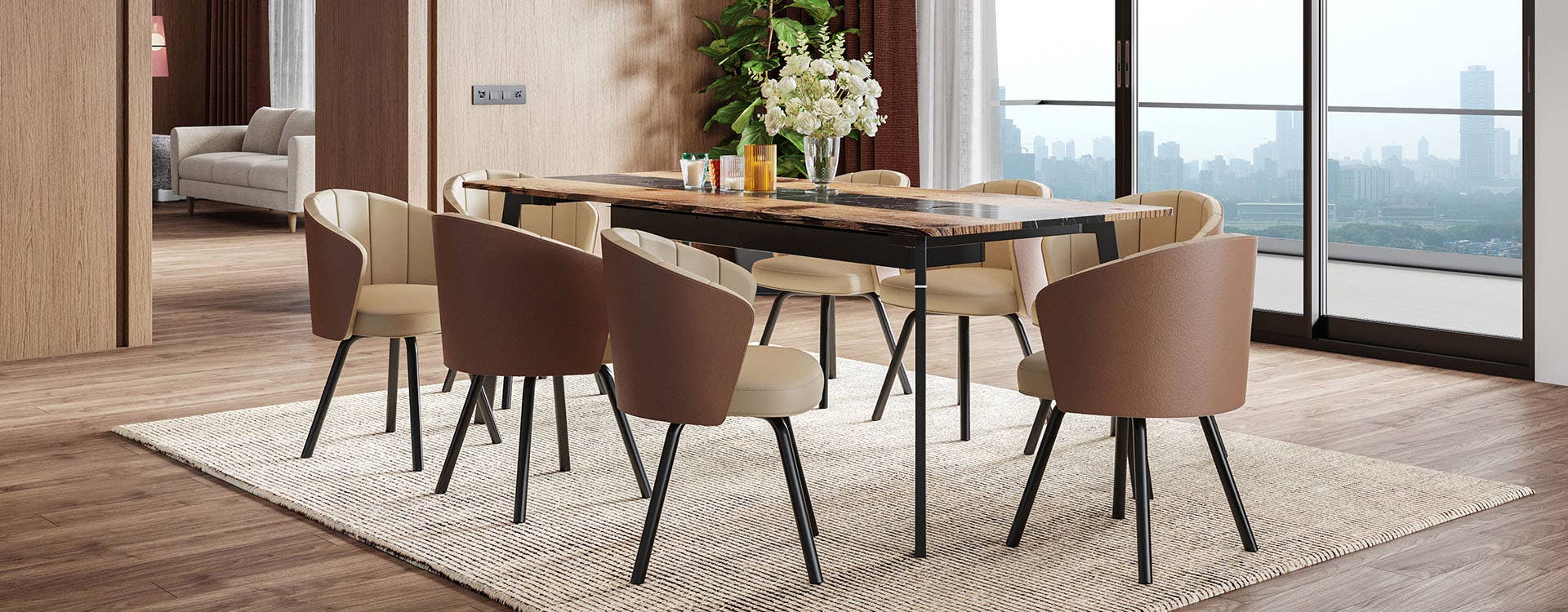
A dining table can look perfect in the showroom and still feel wrong once you sit down. Your knees hit the underside, you find yourself leaning forward to eat, or the chair feels too low against the tabletop. These small mismatches are what turn everyday meals into a mildly uncomfortable habit, which is exactly why table height deserves a closer look before you buy.
What Is the Standard Table Height for Dining Setups?
The standard dining table height is 28 to 30 inches (71–76 cm) from floor to tabletop, with 30 inches being the most common and designed to work comfortably with conventional dining chairs. For most households, this is the safest place to start.
“Standard” does not automatically mean “right for you”, though. Your ideal height also depends on your build, your chairs, and how the table is constructed underneath; a thick apron or a wide support structure can eat into usable knee space even when the tabletop itself sits at a standard height. Treat 28–30 inches as a reliable reference point, not a fixed rule.
How Do You Match Chair Height to Table Height?
Getting the table right is only half the equation; the chair has to work with it. For a standard table height, a seat height of around 17 to 19 inches (43–48 cm) is the common match, and the real test is the gap between the seat and the underside of the tabletop. As a general guide, allow around 10 to 12 inches between the chair seat and the underside of the tabletop for comfortable leg movement.
At the right pairing, you should be able to:
- Sit with your feet supported and your knees bent naturally, legs sliding under the table without catching the underside.
- Rest your arms comfortably at the table without your shoulders feeling raised or hunched.
- Sit upright and close to the table without any awkward reach.
Buying a dining table and chairs separately calls for a little more care, since two pieces can each be comfortable on their own and still feel off together. Wherever possible, sit at the table with the actual chair you plan to use before deciding. When buying online, check the product specifications carefully, including table height, before choosing your dining chairs.
 The right chair makes as much difference as the table itself.
How Much Knee Clearance Do You Actually Need?
Before you buy, look underneath the table for anything that might restrict your legs, thick aprons or crossbars just beneath the tabletop, central pedestals that limit where you can place your feet, or built-in drawers that quietly eat into legroom.
This matters more as more people sit down together. Nobody should have to keep shifting their legs to avoid the table’s frame. A simple way to check: sit in your intended chair and pull yourself in as you would for a meal. If you can sit upright, move your legs freely and get close to the table without your knees touching the underside, you are in good shape.
Leave around 36 inches of clearance between the table edge and walls or surrounding furniture so chairs can be pulled out comfortably and people can move around the table.
Does Table Shape Affect the Right Height?
Not directly. Round, rectangular, square, and oval tables can all sit comfortably at the standard table height; what changes is how the table occupies the room and how people sit around it.
- Rectangular tables make efficient use of longer rooms and larger families, with clearly defined seating along their length.
- Round tables suit smaller or squarer spaces well, drawing everyone in to face each other and making it easier to move around without corners in the way.
- Square tables work nicely in compact, square dining areas, while oval tables offer a softer take on the rectangular table’s generous seating.
Shape mostly affects how much space you need around the table. It does not, on its own, change the ideal tabletop height.
Standard vs. Counter vs. Bar Height: What’s the Difference?
Dining tables generally fall into three height categories. Choosing between them comes down to how you want to sit and use the space, rather than what looks trendiest.
|
Table type |
Typical height |
Paired with |
Best suited to |
|
Standard dining |
28–30 in (71–76 cm) |
Dining chairs |
Everyday meals, family dining |
|
Counter height |
34–36 in (86–91 cm) |
Counter stools |
Casual, contemporary dining |
|
Bar height |
40–42 in (102–107 cm) |
Bar stools |
Entertaining, social spaces |
Standard height remains the most versatile choice, working comfortably for people of different ages around the same table.
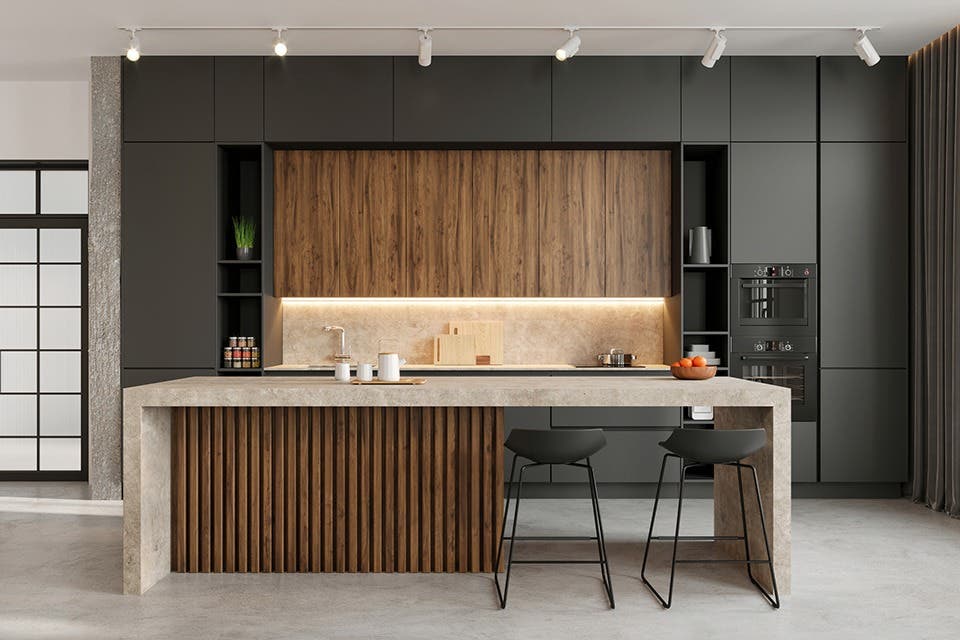
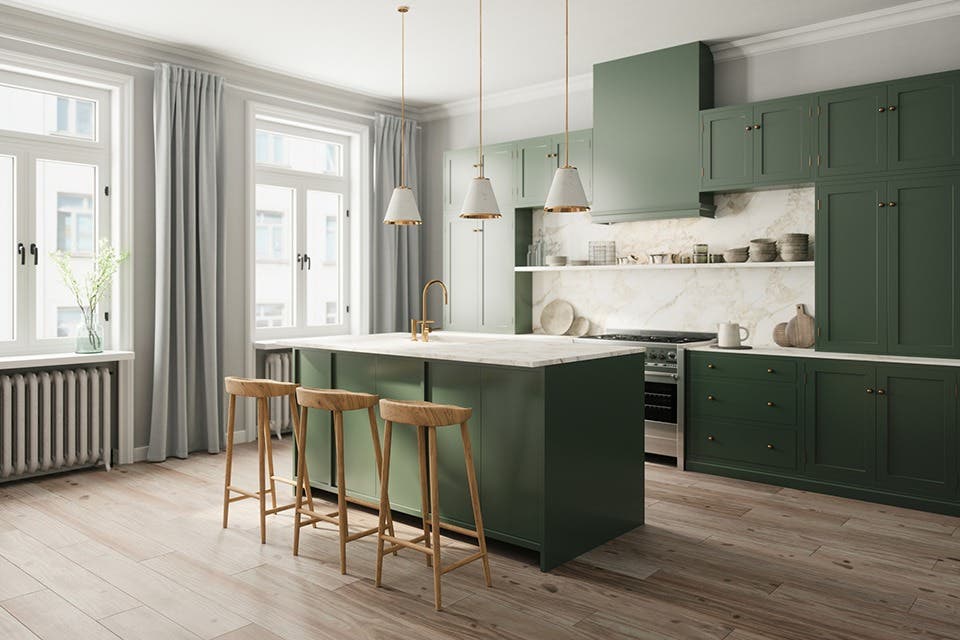
Counter-height tables bring a more relaxed, elevated feel to open-plan kitchens, but need correspondingly taller stools rather than regular dining chairs.
Bar-height tables sit taller still and suit casual entertaining far better than a family dinner that runs long, especially with children or older family members at the table.
|
|
|
|
A counter-height table is typically seen in island kitchens, with counter stools in tow. |
Bar height seating is noticeably taller. |
What Is the Ideal Table Height for Kids, Tall People and Wheelchair Users?
Dining Table Height for Children: A standard-height table paired with a booster seat or a properly sized chair works well, and it also gives you more flexibility as they grow than a taller counter- or bar-height table would.
Dining Tables for Taller Adults: A standard 28–30-inch table can still work comfortably with the right chair; it is worth trying the full seating combination before assuming you need something taller, since raising the table without raising the chair to match just trades one discomfort for another.
Dining Setups for Wheelchair Users: The tabletop height matters less than the clear space underneath it. The table’s legs, apron or pedestal need to allow enough room for a wheelchair to approach and sit close, so it is worth checking the actual clearance, the chair’s dimensions and the room to manoeuvre, rather than relying on a standard measurement alone.
An adjustable or purpose-built accessible table can offer more flexibility where one setup needs to work for several people.
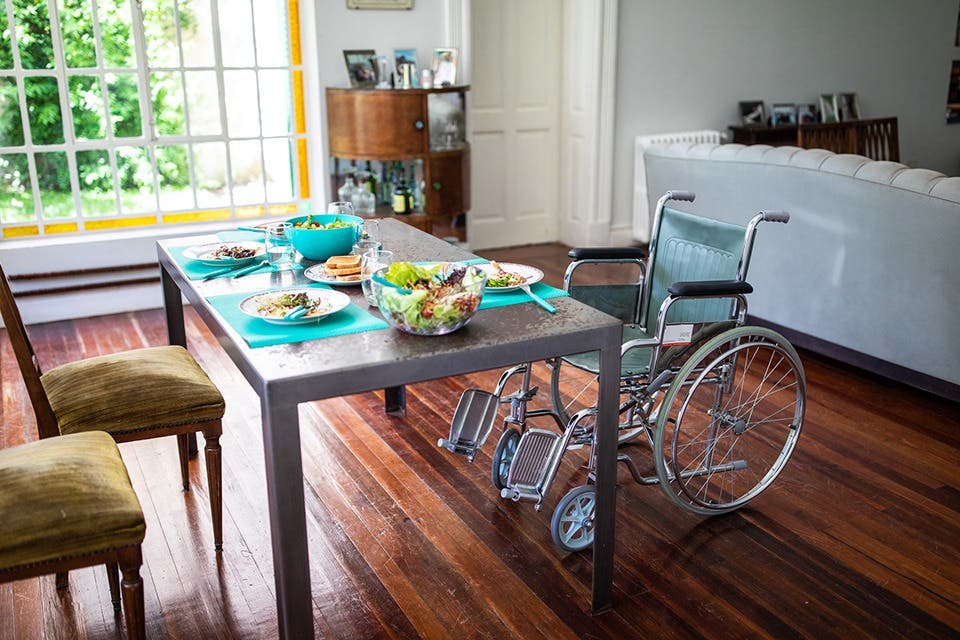 A comfortable dining table is one that works for every member of the household.
Are Adjustable-Height Dining Tables Worth It?
Yes, adjustable dining tables can be worth the investment, particularly in a dining area that needs to work for people with different needs, or as children grow into a different chair height altogether.
Before you invest in one, it is worth asking a few questions like:
- whether you would actually adjust the height regularly
- whether the table stays stable once you do
- whether it still offers enough knee clearance
- if it suits the room at every setting
For most households, a well-designed fixed-height table does the job perfectly well. Adjustability earns its keep when it is solving a genuine, everyday need, not simply adding another feature to the spec sheet.
The Right Height Makes Every Meal More Comfortable
Choosing a dining table is really about building a space where everyone can settle in, whether that is a rushed breakfast before school or a celebration that keeps the whole family at the table a little longer.
Start with the standard 28 to 30-inch range, then think about who will use the table, the chairs you are pairing it with, and what is really happening underneath the tabletop. Get those three right, and comfort takes care of itself.