The dining table rarely does just one job anymore. It hosts breakfast, homework, laptop screens, festive dinners, and the conversations that carry on long after the plates are cleared. Getting the size right matters more than simply finding a table that fits the room: too small, and everyone feels cramped; too large, and the room becomes harder to move through. Here’s how to find the right dimensions for your household, from a cosy two-seater to a table built for ten.
What Are Standard Dining Room Table Dimensions?
As a general guide, a two-seater dining table is typically around 30 to 36 inches long, a six-seater around 60 to 72 inches, and a ten-seater can extend to 96 inches or more (the full chart is just below). There is no single standard dining table size; dimensions vary with seating capacity and shape.
Most dining tables share the same practical principles:
- Each person needs enough tabletop space
- Chairs need room to pull out
- People need a clear path around the table
For rectangular tables, allow roughly 24 inches of tabletop width per person as a starting point. Treat these as planning ranges rather than rigid rules; the exact figures shift with chair size and table design, but the goal stays the same: everyone at the table, comfortably, with no one squeezed in.
Dining Table Size Chart: 2 to 10 Seats at a Glance
A quick reference for comparing standard dining table dimensions across seating capacities.
|
Seating capacity |
Approx. length |
Approx. width |
Ideal for |
|
2-seater |
30–36 in / 76–91 cm |
30–36 in / 76–91 cm |
Couples, breakfast nooks, compact homes |
|
4-seater |
48–60 in / 122–152 cm |
30–36 in / 76–91 cm |
Small families, apartments |
|
6-seater |
60–72 in / 152–183 cm |
36–40 in / 91–102 cm |
Families, everyday dining |
|
8-seater |
72–96 in / 183–244 cm |
36–44 in / 91–112 cm |
Larger families, frequent entertaining |
|
10-seater |
96–120 in / 244–305 cm |
40–48 in / 102–122 cm |
Large families, regular gatherings |
These are approximate planning dimensions. The actual size you need will depend on the table’s shape, leg design, chair dimensions, and how much space your dining area actually offers.
 A well-proportioned table gives everyone enough room without overwhelming the space.
2 or 4 People: Small Household, Full Table
Sometimes a table just needs to hold your morning chai and evening conversations without taking over the room. A two-seater around 30 to 36 inches in length and width works well for couples or single-person homes. A round or square design can feel especially at home in a compact breakfast nook or apartment corner, giving you a dedicated dining spot while keeping the room feeling open.
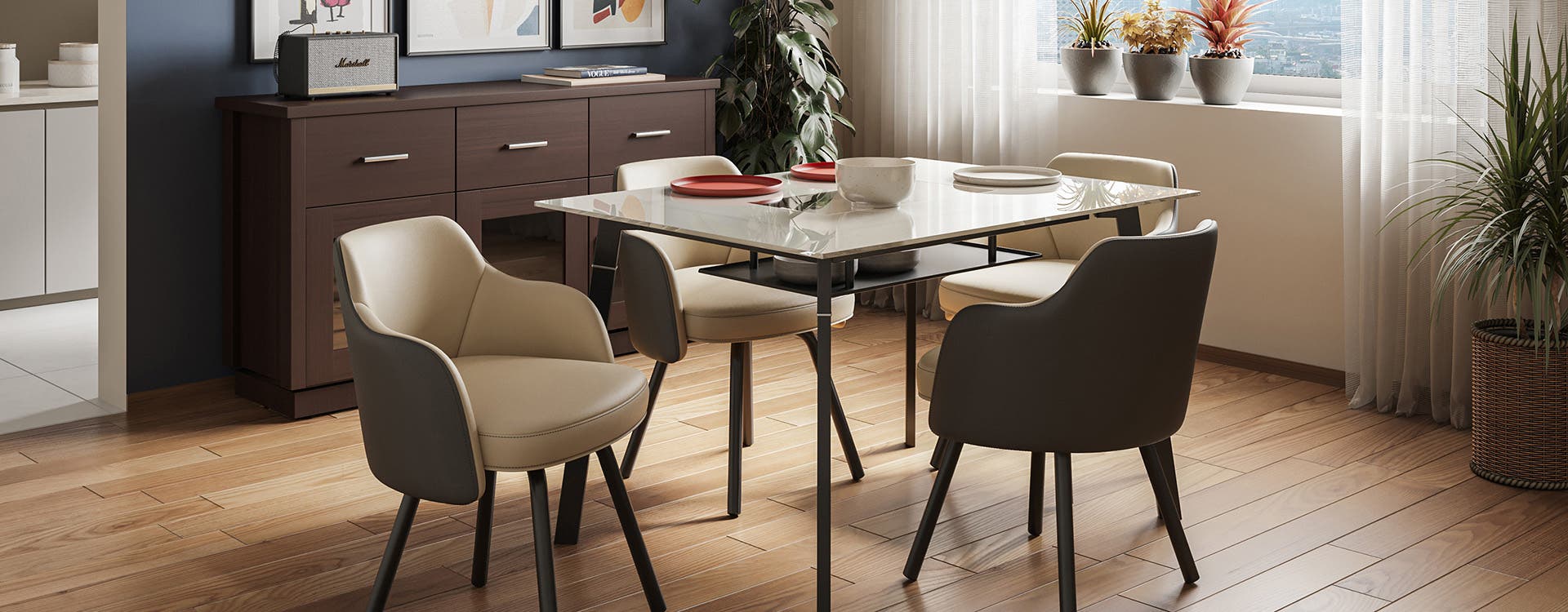
A four-seater generally needs around 48 to 60 inches of length and 30 to 36 inches of width if rectangular. It’s often the table a young family grows into, comfortable for everyday meals, with just enough flexibility for a friend or two to pull up a chair when they visit. A round four-seater can also make movement around a tight dining area feel easier, since there are no corners to navigate.
6 or 8 Guests: When the Table Becomes the Centre of the Room
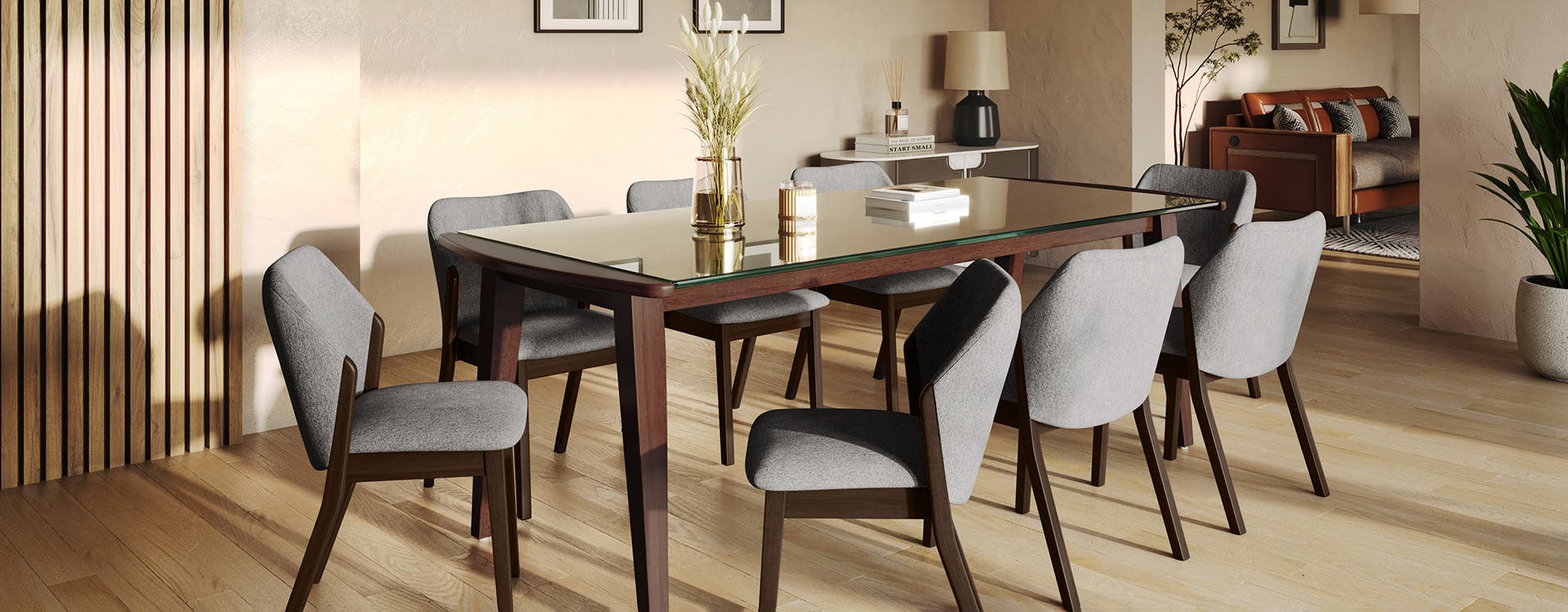
This is where the dining table starts to become more of a social centre, the table people gather around for a birthday dinner or a weekend that turns into an impromptu house party. A six-seater rectangular table typically measures 60 to 72 inches long and 36 to 40 inches wide, while an eight-seater needs roughly 72 to 96 inches in length and 36 to 44 inches in width. Always measure the entire dining zone, including space for chairs and movement.
Worth asking yourself: do you genuinely need eight seats daily, or six with room to stretch to eight when the whole family descends for a festival? If it’s the latter, an extendable table or dining bench lets the room feel right on an ordinary Tuesday and still rise to the occasion when it counts.
10-Seater: Built for the Big Gatherings
A 10-seater dining table typically needs approximately 96 to 120 inches (244–305 cm) in length and 40 to 48 inches (102–122 cm) in width when rectangular—a substantial footprint once chairs and circulation space are factored in.
A table this size works best with a dedicated dining room or a generous open-plan space, somewhere it can be the natural centrepiece for the big family gatherings it’s built for. If that kind of scale doesn’t quite match your everyday life, it’s worth revisiting whether a six- or eight-seater with built-in flexibility might actually serve you better.
Table Shape and Table Dimensions: Why One Doesn’t Work Without the Other
Seating capacity is only part of the sizing equation. The table’s shape affects how it fits into the room and how comfortable it feels to sit around.
Rectangular tables work well in long or narrow rooms, offering generous seating without excessive width. Round tables suit compact or square spaces, making movement easier and conversation more intimate. Square tables work well in smaller, square dining areas, while oval tables offer the seating capacity of a rectangle with softer, rounded edges.
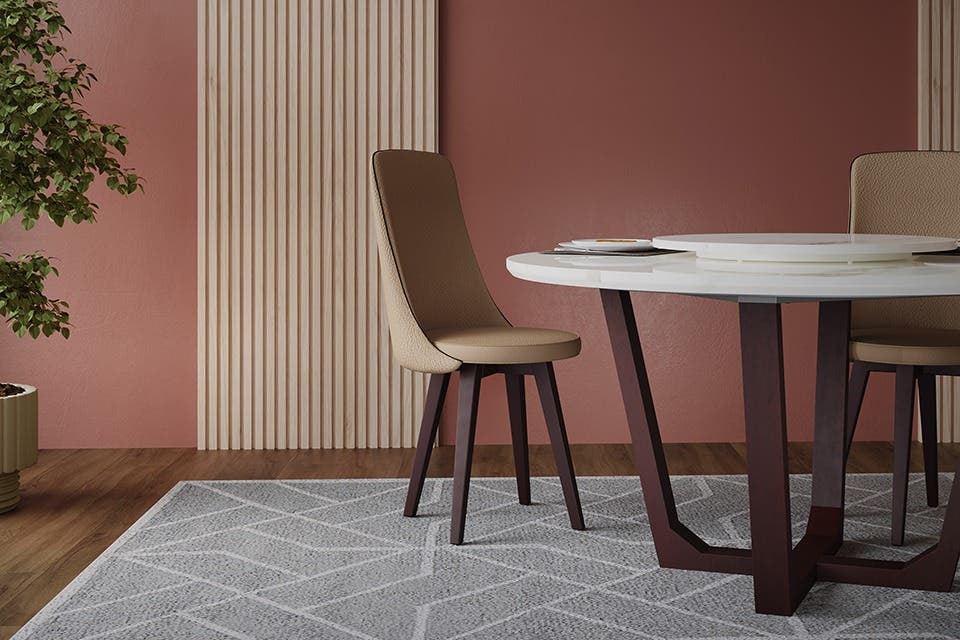 A round table softens a compact dining area and makes movement around it easier.
Clearance Space: What Most People Forget to Measure
This is one of the most overlooked parts of choosing dining table dimensions, and often the difference between a table that feels welcoming and one that gets in the way. Don’t measure only the tabletop; account for the dining table set, including chairs, seated people and pathways around them.
As a starting point, allow at least 36 inches (91 cm) between the table’s edge and the nearest wall or furniture. For busy walkways, 42 to 48 inches (107–122 cm) makes movement more comfortable.
Before finalising the size, mark the table’s footprint with tape and pull out imaginary chairs. Can people walk behind seated diners, pull chairs out fully and reach the kitchen without squeezing through?
Dining Table Size Mistakes That Are Easy to Make
Even with the right measurements in mind, a few common oversights can leave a dining table feeling too cramped or impractical. Watch out for these mistakes when choosing your table:
- Choosing based only on the number of seats. A "six-seater" doesn’t guarantee the same dimensions across different designs; always check the actual product measurements.
- Forgetting chair clearance. A table can fit perfectly between two walls until you add chairs, so measure with chairs pulled out, not just the tabletop.
- Buying for occasional guests. If you host ten people twice a year but sit four every day, a permanent 10-seater may not be the most practical choice. Think about what serves your everyday table, not the once-a-year gathering.
- Ignoring the room’s shape. A long rectangular table may technically fit in a square room without feeling comfortable in it. Consider how the table’s shape relates to the room’s proportions.
- Prioritising appearance over movement. That striking oversized table might be the centrepiece you imagined, but if everyone has to squeeze past it, it becomes a source of frustration rather than pride.
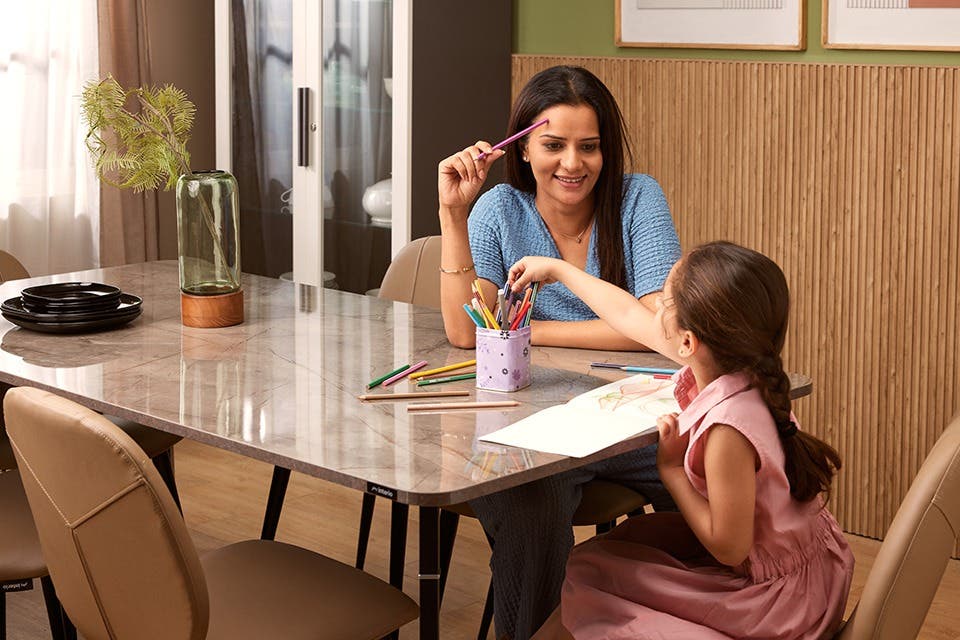 Rectangular rooms work best with rectangular dining tables.
Find a Dining Table That Fits Your Home and Your Life
Matching a number on a chart is helpful, but dining table dimensions are really about giving people room to sit, move, and spend time together. Start with how many people you usually seat, measure the room, and factor in your chairs and clearance before choosing a shape. Choose flexibility where it helps and let the rest follow from how you want your table, and your home, to feel.