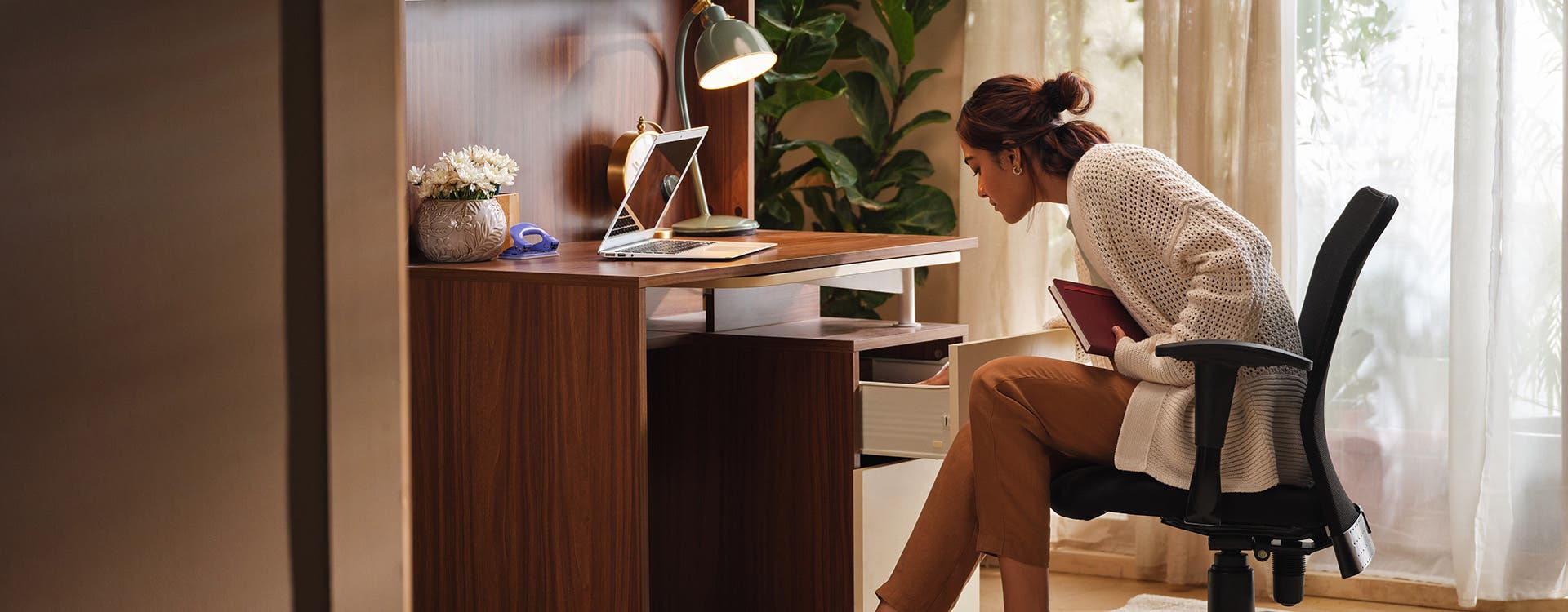
A study table needs to do more than hold a laptop and a few books. It needs to give you room to work comfortably, support good posture, and fit naturally into wherever you’ve carved out space for it: a dedicated home office, a corner of the bedroom, a child’s study zone. Get the size right, and the table disappears into the background of your day, quietly holding up whatever you’re building there.
The Standard Study Table Dimensions to Start From
A typical study table stands approximately 28 to 30 inches (71–76 cm) high, with a width of around 36 to 60 inches (91–152 cm) and a depth of approximately 20 to 30 inches (51–76 cm). Treat these as a useful starting point rather than a fixed standard; a laptop-only workspace needs far less surface area than a table used for studying, writing, drawing and storing books.
|
Study table type |
Approx. width |
Approx. depth |
Typical height |
|
Compact |
30–36 in / 76–91 cm |
18–24 in / 46–61 cm |
28–30 in / 71–76 cm |
|
Standard |
36–48 in / 91–122 cm |
20–24 in / 51–61 cm |
28–30 in / 71–76 cm |
|
Spacious |
48–60 in / 122–152 cm |
24–30 in / 61–76 cm |
28–30 in / 71–76 cm |
|
Large work/study table |
60+ in / 152+ cm |
24–30+ in / 61–76+ cm |
28–30 in / 71–76 cm |
If you work primarily on a laptop, a compact table may be plenty. If you’re juggling a monitor, notebooks and reference books at once, a wider and deeper surface makes a real difference. This difference shows up every day, in how settled you feel sitting down to work rather than shuffling things around to make room.
 Your study table dimensions should match how much you actually need to spread out.
Height, Width and Depth: The Numbers That Actually Matter
The three measurements that matter most are height, width and depth, and comfort depends on how they work together, not any single number.
Study Table Height
For a conventional study table, 28 to 30 inches (71–76 cm) is a useful standard range, though comfort depends on the chair just as much as the table. Get the pairing right, and you stop thinking about your posture altogether; after all, a table that lets you focus on the work instead of your aching shoulders is really the whole point.
Ideal Study Table Width
A width of 36 to 48 inches (91–122 cm) suits many everyday study setups. Go smaller if space is tight and you only need room for a laptop and notebook. Choose a wider table, around 48 to 60 inches, if you’re accommodating a monitor, books, writing materials or multiple devices. A student cramming for exams and a parent running a side business from the same corner of the house will want very different amounts of elbow room, and both deserve a table that keeps up with them.
Study Table Depth
A depth of around 20 to 30 inches (51–76 cm) gives you varying amounts of working space. Around 20 to 24 inches is usually enough for a simple laptop setup, while a deeper surface helps if you use a desktop monitor, write frequently or need books and documents in front of you. In a compact room, though, extra depth can eat into floor space you’d rather keep free for actually moving around.
Choosing a Study Table Size That Fits the Room
The right size should respond to the room as much as the work, and to who’s actually going to be sitting there.
-
In a compact bedroom, a study table around 30 to 36 inches wide gives you a useful workspace without overwhelming the room. Look for slim designs, wall-mounted options or built-in storage where floor space is tight.
-
In a child’s room, a compact or adjustable table works well, since children need room for books, notebooks and art supplies but also space to move and grow. An adjustable design can save you from replacing the whole table every couple of years, and it grows with them instead of being outgrown.
-
In a home office, where the table doubles as a full-time desk, consider a width of 48 to 60 inches or more to fit a monitor, keyboard, documents and other essentials. If you’re there for hours at a stretch, comfort earns its keep fast; prioritise it over squeezing in the smallest table that technically fits.
-
In a shared study space, two people need more than twice the surface area of a single-user setup. Consider whether both people will work at once and whether each needs separate storage, then choose a longer table with enough elbow room so sharing feels natural rather than like a daily negotiation.
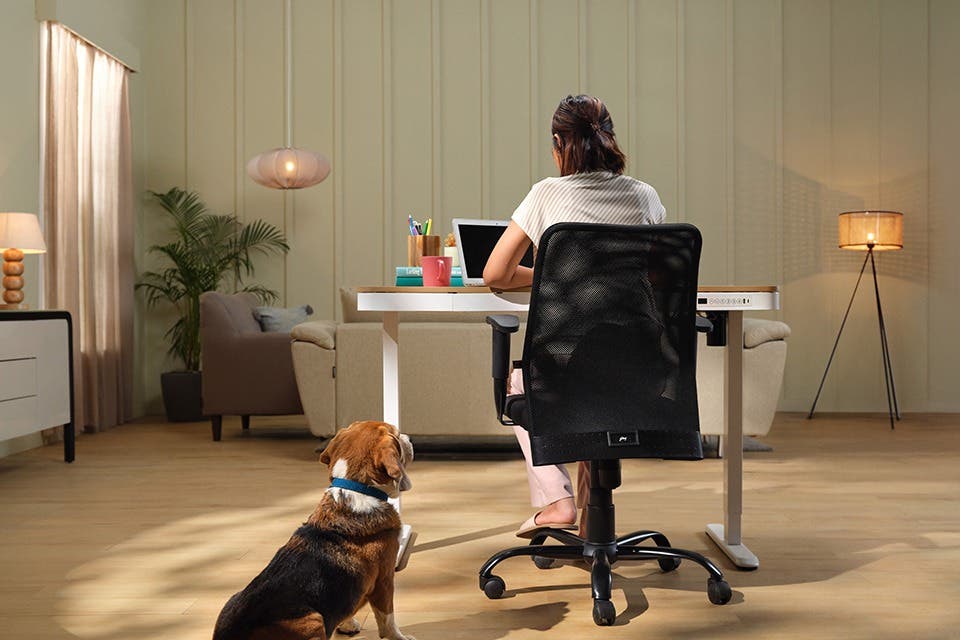 The slim design of a compact desk can hold its own in any room.
How Do You Work Out the “Right” Size of a Study Table?
Finding the right study table size gets easier when you work through your needs and your space in order, rather than starting with the table itself.
What you need to do: Think about whether you’ll use a laptop or desktop, how many screens, whether you write or draw regularly, and whether the table needs to seat more than one person. Your answers point to how much surface area you actually need.
The space you have: Measure the wall or floor area you’re considering, then account for everything around it, including the chair; a table that fits neatly against a wall can still be uncomfortable if there’s no room to pull the chair out.
Room to move: Don’t measure only the tabletop. Allow space behind the chair to sit down, stand up and move freely, more so if the table sits along a main walkway.
Storage: Drawers, shelves or a hutch add useful storage without another piece of furniture, but they also add to the footprint, so weigh whether you need built-in storage or would rather keep the tabletop flexible.
The chair: Treat the table and chair as one setup—check that your legs fit comfortably underneath, your feet rest flat on the floor, your elbows sit naturally at the tabletop, and the chair can be pulled out without hitting anything else.
Technology: Factor in chargers, cables and power sockets, a table with proper cable management keeps the workspace tidy without sacrificing surface area.
Build a Study Space That Works as Hard as You Do
Measure the room, think honestly about how you work, and let the chair and storage follow from there. Get those basics right, and you’ll make the space work better for you. The right table dimensions will give you room to focus today and enough flexibility to keep up with how your needs evolve.